The Effect of a High-Intensity Interval Training Program on Body Mass Index in Military Personnel
Keywords:
High-Intensity Interval Training, Body Mass Index, Military PersonnelAbstract
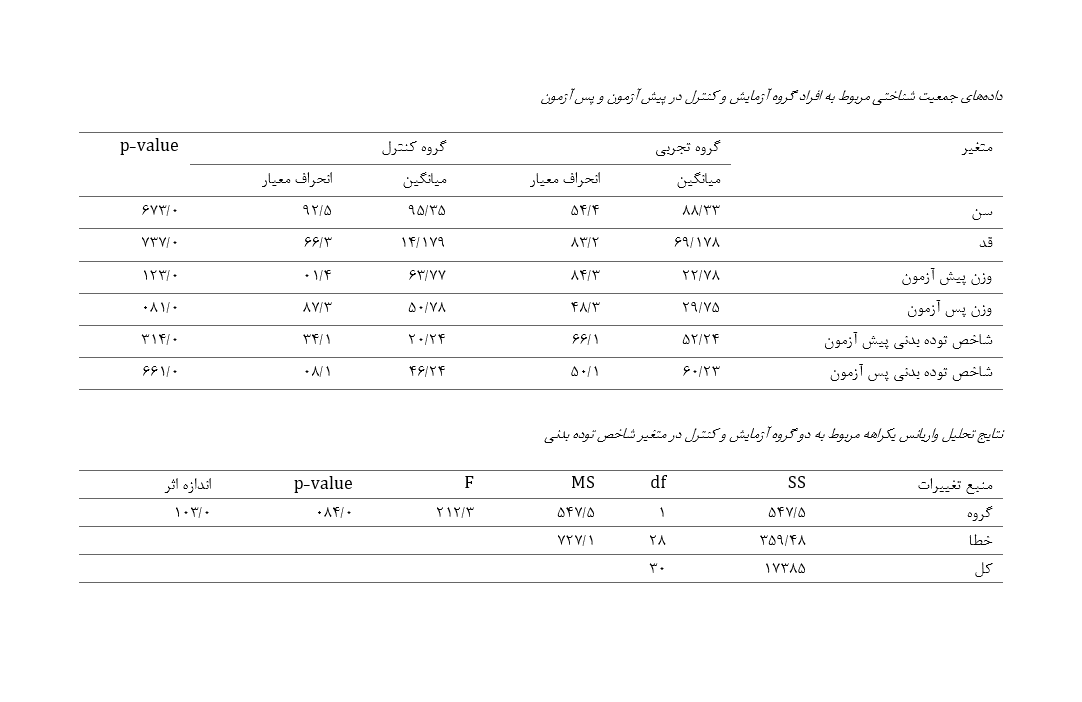
This study aimed to investigate the effect of a high-intensity interval training (HIIT) program on the body mass index (BMI) of military personnel. This controlled pretest–posttest intervention included 30 military personnel who were randomly allocated to experimental and control groups (n=15 each). Body weight and height were measured using an AND digital scale (Model HL400) and a SECA stadiometer, respectively. The 8-week HIIT protocol was based on Buchheit and Laursen (2013) and was performed three sessions per week. Because the assumptions required for ANCOVA were not met, between-group posttest BMI scores were compared using one-way ANOVA. Analyses were performed in SPSS version 25 with statistical significance set at p<0.05. There was no statistically significant between-group difference in posttest BMI (F(1,28)=3.212, p=0.084, η²=0.103). Under the present 8-week protocol, HIIT did not produce a statistically significant between-group difference in BMI. Future studies should include direct measures of body composition and dietary monitoring to evaluate changes not captured by BMI.
References
Batacan, R. B., Duncan, M. J., Dalbo, V. J., Tucker, P. S., & Fenning, A. S. (2017). Effects of high-intensity interval training on cardiometabolic health: A systematic review and meta-analysis of intervention studies. British Journal of Sports Medicine, 51(6), 494-503. https://doi.org/10.1136/bjsports-2015-095841
Buchheit, M., & Laursen, P. B. (2013). High-intensity interval training, solutions to the programming puzzle: Part I: Cardiopulmonary emphasis. Sports Medicine, 43(5), 313-338. https://doi.org/10.1007/s40279-013-0029-x
Garber, C. E., Blissmer, B., Deschenes, M. R., Franklin, B. A., Lamonte, M. J., Lee, I. M., Nieman, D. C., & Swain, D. P. (2011). Quantity and quality of exercise for developing and maintaining cardiorespiratory, musculoskeletal, and neuromotor fitness in apparently healthy adults: Guidance for prescribing exercise. Medicine & Science in Sports & Exercise, 43(7), 1334-1359. https://doi.org/10.1249/MSS.0b013e318213fefb
Gibala, M. J., Little, J. P., MacDonald, M. J., & Hawley, J. A. (2012). Physiological adaptations to low-volume, high-intensity interval training in health and disease. The Journal of Physiology, 590(5), 1077-1084. https://doi.org/10.1113/jphysiol.2011.224725
Keating, S. E., Johnson, N. A., Mielke, G. I., & Coombes, J. S. (2017). A systematic review and meta-analysis of interval training versus moderate-intensity continuous training on body adiposity. Obesity Reviews, 18(8), 943-964. https://doi.org/10.1111/obr.12536
Knapik, J. J., Sharp, M. A., Darakjy, S., Jones, S. B., Hauret, K. G., & Jones, B. H. (2006). Temporal changes in the physical fitness of US Army recruits. Sports Medicine, 36(7), 613-634. https://doi.org/10.2165/00007256-200636070-00005
Sharp, M. A., Knapik, J. J., Walker, L. A., Burrell, L., Frykman, P. N., Darakjy, S. S., Lester, M. E., & Marin, R. E. (2008). Physical fitness and body composition after a 9-month deployment to Afghanistan. Medicine & Science in Sports & Exercise, 40(9), 1687-1692. https://doi.org/10.1249/MSS.0b013e318176b978
Wewege, M., van den Berg, R., Ward, R. E., & Keech, A. (2017). The effects of high-intensity interval training vs. moderate-intensity continuous training on body composition in overweight and obese adults: A systematic review and meta-analysis. Obesity Reviews, 18(6), 635-646. https://doi.org/10.1111/obr.12532
World Health Organization. (2024). Obesity and overweight.
Downloads
Publication Timeline
- Submitted
- Revised
- Accepted
Issue
Section
License
Copyright (c) 2025 سید مهدی رضوی دهکردی; محمدرضا زارعلی , امین ابدالی فر (نویسنده)

This work is licensed under a Creative Commons Attribution-NonCommercial 4.0 International License.