Effects of Dynamic Neuromuscular Stabilization Exercises with a Telerehabilitation Approach on Weight Changes and Flexibility in Obese Elderly Women
Keywords:
Dynamic neuromuscular stabilization exercises, telerehabilitation, weight, flexibility, obese elderly womenAbstract
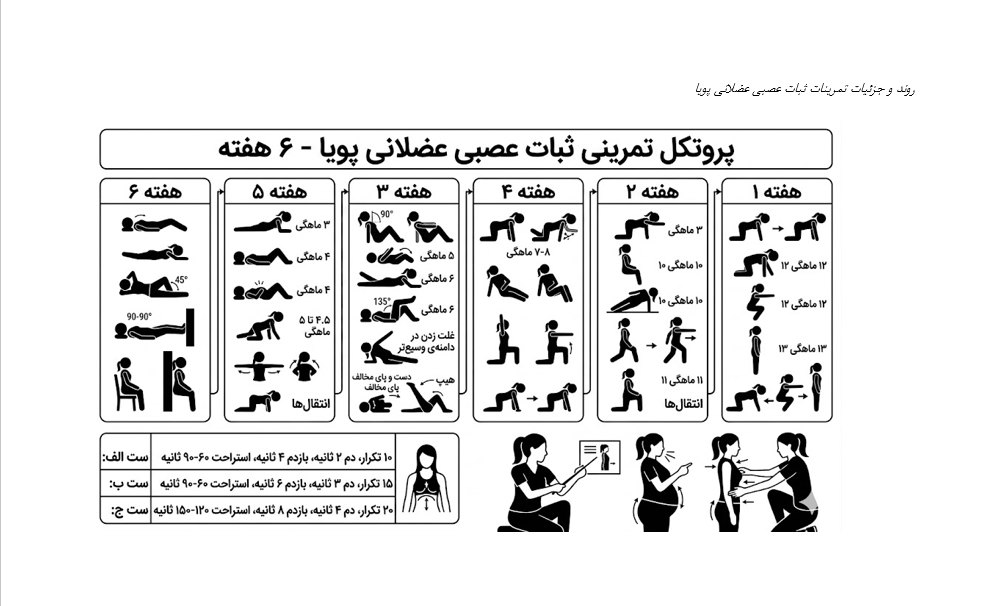
The present study aimed to investigate the effects of dynamic neuromuscular stabilization exercises with a telerehabilitation approach on weight changes and flexibility in obese elderly women. This research was a quasi-experimental study with a pretest-posttest control group design. The statistical population consisted of overweight and obese elderly women living in Mashhad, aged 60 to 75 years. The research sample included 30 individuals with a body mass index greater than 25 kg/m², selected through convenience sampling and, after screening, randomly assigned to an experimental group (n=15) and a control group (n=15). The experimental group received an eight-week dynamic neuromuscular stabilization exercise protocol (three sessions per week) with initial in-person instruction followed by telerehabilitation follow-up. Weight, body mass index, and upper and lower body flexibility were measured at both pretest and posttest stages. Analysis of covariance, controlling for pretest scores, was used to analyze the data, with a significance level set at 0.05. The results of the ANCOVA showed significant differences between the experimental and control groups for weight and body mass index (P=0.001). Additionally, significant differences were observed between the two groups for upper body flexibility of the right and left limbs (P=0.001) and lower body flexibility of the right and left limbs (P=0.001). Six weeks of dynamic neuromuscular stabilization exercises with a telerehabilitation approach may lead to reduced weight and body mass index, as well as improved upper and lower body flexibility, in overweight and obese elderly women. Given the limited sample size, lack of long-term follow-up, and incomplete control over dietary intake and activities outside the program, clinical generalization of the results should be made with caution.
References
Afsari, Z., Rahimi, N. M., & Azimkhani, A. (2024). Investigating the effects of dynamic neuromuscular stabilization exercises on chest Mobility, upright sitting Height, and quality of life in obese women. https://www.sid.ir/paper/1367797/en
Babagoltabar-Samakoush, H., Aminikhah, B., & Bahiraei, S. (2025). Effectiveness of dynamic neuromuscular stabilization training on strength, endurance, and flexibility in adults with intellectual disabilities, a randomized controlled trial. Scientific Reports, 15(1), 768. https://www.nature.com/articles/s41598-024-85046-z
Batrakoulis, A., Fatouros, I. G., Chatzinikolaou, A., Draganidis, D., Georgakouli, K., Papanikolaou, K., Deli, C. K., Tsimeas, P., Avloniti, A., & Syrou, N. (2019). Dose-response effects of high-intensity interval neuromuscular exercise training on weight loss, performance, health and quality of life in inactive obese adults: Study rationale, design and methods of the DoIT trial. Contemporary clinical trials communications, 15, 100386. https://www.sciencedirect.com/science/article/pii/S2451865419300067
Batrakoulis, A., Tsimeas, P., Deli, C. K., Vlachopoulos, D., Ubago-Guisado, E., Poulios, A., Chatzinikolaou, A., Draganidis, D., Papanikolaou, K., & Georgakouli, K. (2021). Hybrid neuromuscular training promotes musculoskeletal adaptations in inactive overweight and obese women: a training-detraining randomized controlled trial. Journal of sports sciences, 39(5), 503-512. https://www.tandfonline.com/doi/abs/10.1080/02640414.2020.1830543
Bhattacharya, P. K., Deka, K., & Roy, A. (2016). A community-based study to assess test–retest reliability of senior fitness test in the geriatric population in a Northeastern Indian city. Int J Med Sci Public Health, 5, 1606-1612. https://www.researchgate.net/profile/Akash-Roy-3/publication/291042535_A_community-based_study_to_assess_test-retest_reliability_of_senior_fitness_test_in_the_geriatric_population_in_a_northeastern_Indian_city/links/6062bfba299bf17367795be9/A-community-based-study-to-assess-test-retest-reliability-of-senior-fitness-test-in-the-geriatric-population-in-a-northeastern-Indian-city.pdf
Binabaji, S., Mohammad Rahimi, N., & Esfahani, M. (2025). The Effect of 6 Weeks of Dynamic Neuromuscular Stabilization Exercises on Motor Control, Cardiovascular Fitness, and Respiratory Performance in Overweight and Obese Women. Biological Research For Nursing, 27(4), 581-591. https://journals.sagepub.com/doi/abs/10.1177/10998004251337451
Cavaggioni, L., Gilardini, L., Croci, M., Formenti, D., Merati, G., & Bertoli, S. (2023). The usefulness of Integrative Neuromuscular Training to counteract obesity: a narrative review. International Journal of Obesity (2005), 48(1), 22. https://www.nature.com/articles/s41366-023-01392-4
Concha-Cisternas, Y., Castro-Piñero, J., Vásquez-Muñoz, M., Molina-Márquez, I., Vásquez-Gómez, J., & Guzmán-Muñoz, E. (2024). Effects of neuromuscular training on postural balance and physical performance in older women: randomized controlled trial. Journal of Functional Morphology and Kinesiology, 9(4), 195. https://www.mdpi.com/2411-5142/9/4/195
Frank, C., Kobesova, A., & Kolar, P. (2013). Dynamic neuromuscular stabilization & sports rehabilitation. International journal of sports physical therapy, 8(1), 62. https://pmc.ncbi.nlm.nih.gov/articles/PMC3578435/
Gallo, L. H., Gurjao, A. L., Prado, A. K., Ceccato, M., Goncalves, R., Gobbi, L. T., & Gobbi, S. (2012). STRETCHING TRAINING, MAXIMUM MUSCLE STRENGTH and FLEXIBILITY, IN THE ELDERLY. https://repositorio.unesp.br/bitstreams/b66b66d4-50da-41f0-9fe2-82d7c8ff9bc5/download
Ghavipanje, V., Mohammad Rahimi, N., & Akhlaghi, F. (2022). The effect of 6 weeks dynamic neuromuscular stabilization (DNS) breathing exercises on postpartum balance and quality of life in primiparous women with low back pain. The Iranian Journal of Obstetrics, Gynecology and Infertility, 25(5), 78-86. https://ijogi.mums.ac.ir/article_20798_81a639d6f0cf0767751021fb963a3291.pdf
Gulrandhe, P., Kovela, R. K., Samal, S., & Kovela Sr, R. K. (2023). Effect of the Dynamic Neuromuscular Stabilization Technique on Functional Capacity in Overweight and Obese Individuals: A Randomized Controlled Trial. Cureus, 15(7). https://www.cureus.com/articles/145745-effect-of-the-dynamic-neuromuscular-stabilization-technique-on-functional-capacity-in-overweight-and-obese-individuals-a-randomized-controlled-trial.pdf
Hammami, N., Jdidi, H., Khezami, M. A., Ghidaoui, L., Talbi, A., Hannachi, C., Farinha, P. M., Behlouli, E., Bouassida, A., & Dziri, C. (2022). Isokinetic strengthening and neuromuscular electrical stimulation protocol impact on physical performances, functional status and quality of life in knee osteoarthritis overweight/obese women. The Knee, 39, 106-115. https://www.sciencedirect.com/science/article/pii/S0968016022001466
Jurišić, M. V., Roklicer, R., Obradović, A., Stefan, S., Bianco, A., Drid, P., & Obradović, J. (2026). Effect of multicomponent and stability exercises on body composition, physical fitness, and functional movement capability in active older women: a non-randomized study. Experimental Gerontology, 113016. https://www.sciencedirect.com/science/article/pii/S0531556525003456
Kang, S., & Park, I. (2024). Effects of instability neuromuscular training using an inertial load of water on the balance ability of healthy older women: a randomized clinical trial. Journal of Functional Morphology and Kinesiology, 9(1), 50. https://www.mdpi.com/2411-5142/9/1/50
Karartı, C., Özsoy, İ., Özyurt, F., Basat, H. Ç., Özsoy, G., & Özüdoğru, A. (2023). The effects of dynamic neuromuscular stabilization approach on clinical outcomes in older patients with chronic nonspecific low back pain: a randomized, controlled clinical trial. Somatosensory & Motor Research, 40(3), 116-125. https://www.tandfonline.com/doi/abs/10.1080/08990220.2023.2191705
Lee, H. S., Suk, M.-H., Jang, H. S., & Kim, J.-H. (2025). Exercise Guidelines for Enhancing Mobility and Stability in Individuals with Severe Obesity. Journal of Obesity & Metabolic Syndrome, 35(1), 1. https://pubmed.ncbi.nlm.nih.gov/41126475/
Mansori, M. H., & Moghadas Tabrizi, Y. (2020). Effect of a six-week dynamic neuromuscular stability training on performance factors and quality of life in the elderly. Sport Sciences and Health Research, 12(1), 83-92. https://sshr.ut.ac.ir/article_82918.html
Mansori, M. H., Moghadas Tabrizi, Y., & Mohammadkhani, K. (2021). Evaluation of the effectiveness of dynamic neuromuscular stability exercises on balance and walking function in the elderly. Iranian Rehabilitation Journal, 19(3), 279-288. https://www.sid.ir/en/VEWSSID/J_pdf/1017620210307.pdf
Marinkovic, D., Macak, D., Stanic, V., Madic, D. M., Radanovic, D., Gojkovic, Z., Spasic, M., Ilic, A., Trivic, T., & Drid, P. (2024). Effect of different neuromuscular training modalities on postural stability in healthy recreation people: a randomized controlled trial. Scientific Reports, 14(1), 32097. https://www.nature.com/articles/s41598-024-83828-z
Noh, H.-j., & Kim, S.-h. (2015). Comparative study on the effects of proprioceptive neuromuscular facilitation and elastic band exercise on the physical function and blood lipid levels of obese elderly women. Physical Therapy Korea, 22(1), 79-92. https://pdfs.semanticscholar.org/079d/2ad011d5d043061a8ad2e83cdcc80aaf8d10.pdf
Örgün, E., Kurt, C., & Özsu, İ. (2019). The effect of static and dynamic core exercises on dynamic balance, spinal stability, and hip mobility in female office workers. Turkish journal of physical medicine and rehabilitation, 66(3), 271. https://pmc.ncbi.nlm.nih.gov/articles/PMC7557618/
Özalp, R. E., Yılmaz, E., & Çalık, İ. (2026). Effects of stabilization and yoga training on neuromuscular performance in sedentary women. European Journal of Applied Physiology, 126(4), 1997-2009. https://link.springer.com/article/10.1007/s00421-025-06058-9
Widjaja, W., Wongwattanapong, T., Laskin, J. J., & Ajjimaporn, A. (2021). Benefits of Thai Yoga on physical mobility and lower limb muscle strength in overweight/obese older women: A randomized controlled pilot trial. Complementary therapies in clinical practice, 43, 101345. https://www.sciencedirect.com/science/article/pii/S174438812100044X
Yesilkir, S., & Ergezen Sahin, G. (2025). Dynamic neuromuscular stabilization, balance, and conventional training for chronic ankle instability in amateur athletes: a randomised controlled trial. BMC Sports Science, Medicine and Rehabilitation, 17(1), 286. https://link.springer.com/article/10.1186/s13102-025-01319-8
Zemková, E., Kyselovičová, O. g., Jeleň, M., Kováčiková, Z., Ollé, G., Řtefániková, G., Vilman, T., Baláž, M., Kurdiová, T., & Ukropec, J. (2017). Three months of resistance training in overweight and obese individuals improves reactive balance control under unstable conditions. Journal of back and musculoskeletal rehabilitation, 30(2), 353-362. https://journals.sagepub.com/doi/abs/10.3233/BMR-160585
Ziya, M., & Saki, F. (2025). The Impact of Stabilization Exercises on Pain, Quality of Life, and Lower Extremity Strength in Older Women with Low Back Pain: A Randomized Clinical Trial. Women’s Health Bulletin, 12(3), 152-159. https://womenshealthbulletin.sums.ac.ir/article_50948.html
Ziya, M., Saki, F., & Arjipour, M. (2026). Comparison of dynamic neuromuscular stabilization exercises with and without the feldenkrais method on pain, balance, and hip muscle strength in elderly women with chronic non-specific low back pain. Geriatric Nursing, 69, 103804. https://www.sciencedirect.com/science/article/pii/S019745722600011X
Downloads
Publication Timeline
- Submitted
- Revised
- Accepted
Issue
Section
License
Copyright (c) 2025 فروغ نیکقدم دلویی (نویسنده); ناصر محمدرحیمی

This work is licensed under a Creative Commons Attribution-NonCommercial 4.0 International License.