Contextualizing the Architecture of Health Villages for Older Adults with an Emphasis on Sense of Place in the Cultural Context of Yazd
Keywords:
architecture for older adults, sense of place, health village, cultural context of Yazd, quality of lifeAbstract
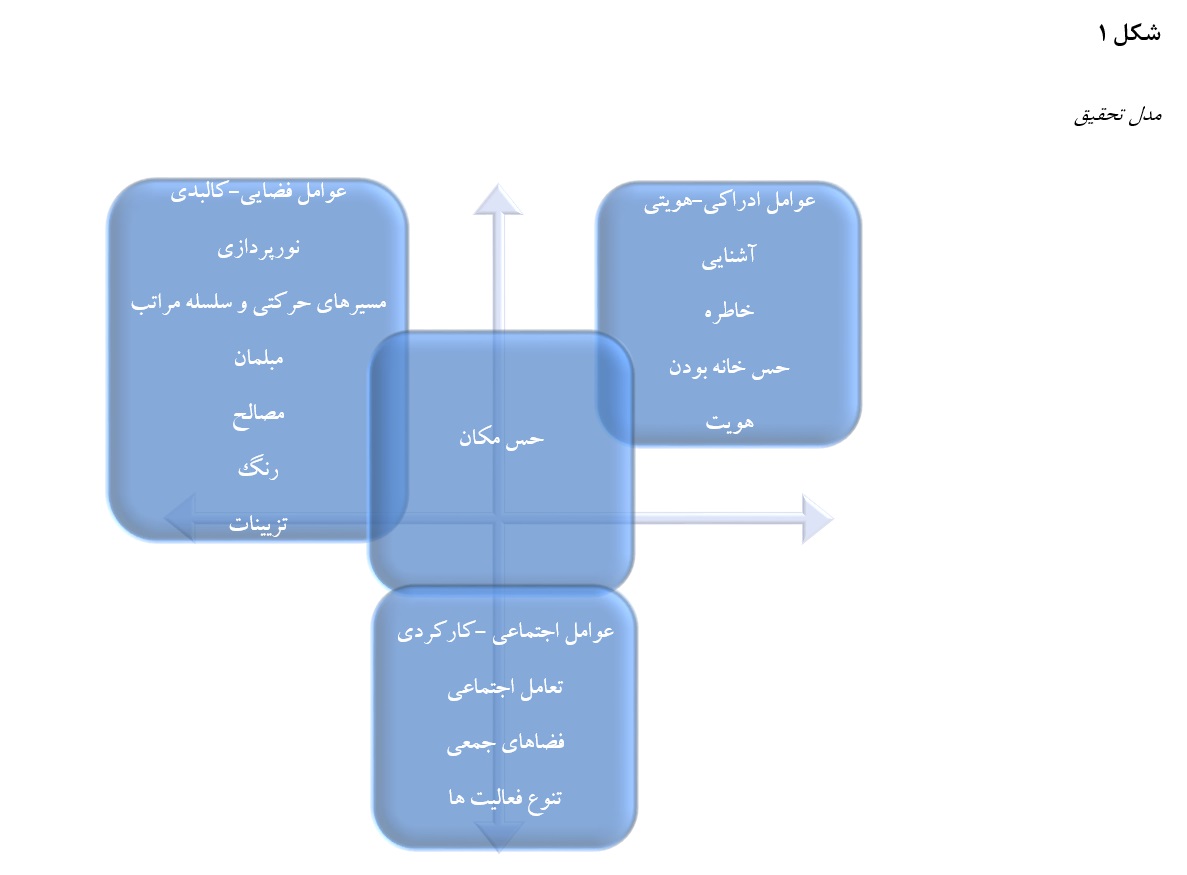
The development of innovative residential models for older adults in Iran has largely relied on treatment-oriented approaches and the replication of Western clinical structures. Such approaches are incompatible with the lifeworld, spatial habits, and cultural patterns of Iranian older adults, particularly those living in historic urban contexts. In Yazd, this incompatibility manifests as a conflict between the traditional pattern of spatial introversion and the extroverted configuration of modern environments, resulting in a diminished sense of place, reduced psychological security, and a condition of placelessness among older adults. Accordingly, the present study aimed to reinterpret, understand, and contextualize the physical and perceptual components influencing the sense of place in the design of health villages for older adults in Yazd. This applied study employed a descriptive–analytical approach. Following the identification of context-specific indicators, older adults’ perceptions were evaluated through a survey and statistical analyses. The results indicate that environmental qualities play a fundamental role in shaping place attachment. Among these qualities, calm and wayfinding-oriented lighting, psychological security and comfort, route legibility, and the presence of familiar semi-public spaces exert the greatest influence on older adults’ lived experiences. Within the context of Yazd, these factors are not merely physical attributes but culturally encoded and memory-laden elements that enable older adults to recognize their surroundings, experience a sense of control, and perceive environmental coherence. The findings further demonstrate that individual variables play a more limited role than environmental structure. Older adults’ experiences are shaped primarily by the extent to which the environment corresponds with indigenous spatial patterns, privacy requirements, human scale, and opportunities for social interaction. By proposing an applied, context-specific framework, the present study recommends a transition from hospital-centered models to residential models compatible with the culture of Yazd and takes an important step toward developing context-sensitive design codes for age-friendly environments.
References
Altman, I., & Low, S. (1992). Place Attachment. Springer. https://doi.org/10.1007/978-1-4684-8753-4
Brown, B. (2004). Neighborhood social integration and older adults. Journal of Gerontology.
Carmona, M. (2018). Public places and urban spaces. Routledge. https://api.taylorfrancis.com/content/books/mono/download?identifierName=doi&identifierValue=10.4324/9781315158457&type=googlepdf
Farrokhnejad, F., & et al. (2021). Place Attachment and Social Functioning of the Elderly. Social Research, 5(2), 99-115.
Gehl, J. (2010). Cities for People. Island Press. https://books.google.com/books?hl=en&lr=&id=lBNJoNILqQcC&oi=fnd&pg=PR3&dq=29.%09Gehl,+J.+(2010).+Cities+for+People.+Island+Press.&ots=hHu8tTW7nr&sig=VRNIXGDT9wMN6Q4BMNb6g8cdGJ0
Ghafari, H., & Kordasti Bami, S. (2022). Transcendent Components of the Nursing Home Space. Interior Architecture, 2(4), 63-80.
Hidalgo, M. C., & Hernández, B. (2001). Place attachment in urban settings. Journal of Environmental Psychology. https://www.sciencedirect.com/science/article/pii/S027249440190221X
Karami, M., & et al. (2021). Design Strategies for Elderly Health Villages. Urban Planning, 11(1), 42-65.
Lawton, M. P. (1999). Environmental taxonomy for aging. Journal of Housing for the Elderly. https://psycnet.apa.org/record/1999-02242-004
Mahmoudi, K. (2020). The Role of Sabats in the Quality of Life in Hot and Dry Climates. Architectural Research, 14(1), 87-106.
Oswald, F., & Wahl, H. (2004). Housing and health in later life. Aging Clinical and Experimental Research. https://www.researchgate.net/profile/Frank-Oswald/publication/7990711_Housing_and_Health_in_Later_Life/links/0fcfd51192ea6067d4000000/Housing-and-Health-in-Later-Life.pdf
Relph, E. (1976). Place and Placelessness. Pion. https://slunik.slu.se/kursfiler/LK0189/40081.1314/Relph_by_Joahansson_sem_7.pdf
Rezaei, M., Mohammadi, A., & Hosseini, F. (2020). The Role of a Healthy Environment for the Elderly in Enhancing Quality of Life and Mental Health. University of Tehran Press.
Rowles, G. (1983). Place and personal identity in old age. Journal of Aging Studies. https://doi.org/10.1016/S0272-4944(83)80033-4
Ruhaniyan, M., & Kazemi, S. (2019). Sense of Place and Quality of Life among the Elderly. Architectural Research, 10(2), 57-82.
Scannell, L., & Gifford, R. (2010). Defining place attachment: A tripartite organizing framework. Journal of Environmental Psychology, 30(1), 1-10. https://doi.org/10.1016/j.jenvp.2009.09.006
Sixsmith, A. (1990). Home and identity in old age. Journal of Environmental Psychology.
Tuan, Y. F. (1977). Space and Place. University of Minnesota Press. https://books.google.com/books?hl=en&lr=&id=M9SLfxpkscgC&oi=fnd&pg=PP7&dq=3.%09Tuan,+Y.-F.+(1977).+Space+and+Place.+University+of+Minnesota+Press.&ots=V8ygyt29Gh&sig=7FkwEVdv85dwT5IWEJH5nNMyr0g
Wiles, J., & et al. (2009). The meaning of "aging in place". The Gerontologist, 49(3), 357-366. https://doi.org/10.1093/geront/gnr098
Downloads
Publication Timeline
- Submitted
- Revised
- Accepted
Issue
Section
License
Copyright (c) 2026 سید حامد حاجی میرزاده (نویسنده); هیرو فرکیش; محمد تاجی (نویسنده)

This work is licensed under a Creative Commons Attribution-NonCommercial 4.0 International License.