رابطه استفاده مداوم از شبکههای اجتماعی با عملکرد حافظه فعال و ذهنآگاهی در جوانان
کلمات کلیدی:
شبکههای اجتماعی, حافظه فعال, ذهنآگاهی, استفاده مسئلهمند؛ , جوانانچکیده
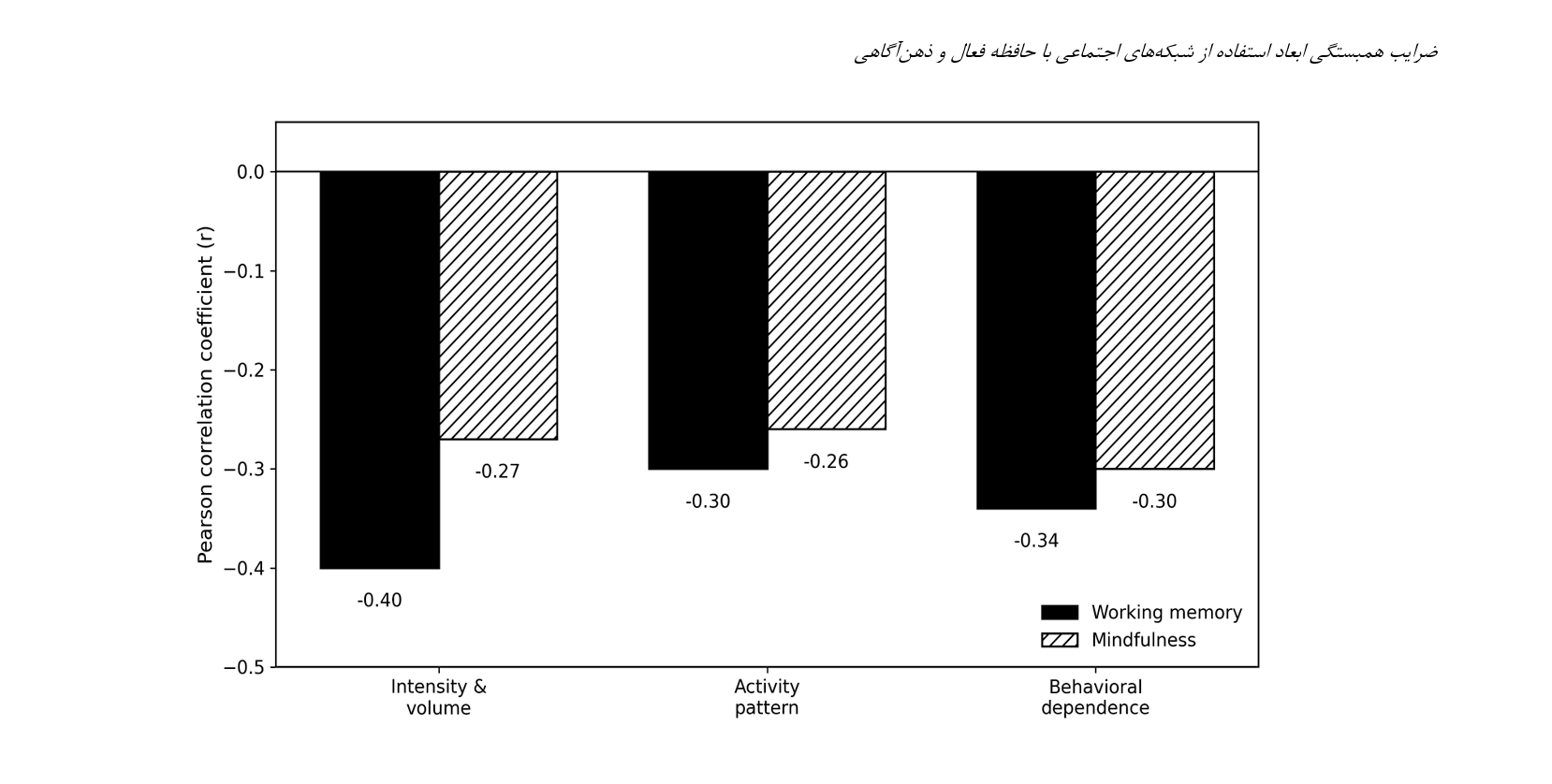
هدف پژوهش حاضر بررسی رابطه استفاده مداوم از شبکههای اجتماعی با عملکرد حافظه فعال و ذهنآگاهی در جوانان بود. این پژوهش از نظر هدف کاربردی و از نظر روش، توصیفی-همبستگی و مقطعی بود. جامعه آماری شامل کاربران فعال شبکههای اجتماعی در دامنه سنی ۱۸ تا ۳۰ سال بود و ۳۸۴ نفر بر اساس فرمول کوکران و با رعایت معیارهای ورود و خروج وارد مطالعه شدند. برای گردآوری دادهها از تکلیف n-back برای سنجش حافظه فعال، پرسشنامه مهارتهای ذهنآگاهی کنتاکی و پرسشنامه محققساخته استفاده مداوم از شبکههای اجتماعی استفاده شد. پایایی پرسشنامه محققساخته با ضریب آلفای کرونباخ ۰٫۷۳ قابل قبول بود. دادهها با استفاده از نرمافزار SPSS و آزمون همبستگی پیرسون تحلیل شدند. یافتهها نشان داد شدت و حجم استفاده از شبکههای اجتماعی با حافظه فعال (r = −0.40, p < .001) و ذهنآگاهی (r = −0.27, p < .001) رابطه منفی و معنادار دارد. الگوی استفاده و نوع فعالیت نیز با حافظه فعال (r = −0.30, p < .001) و ذهنآگاهی (r = −0.26, p < .001) رابطه منفی نشان داد. همچنین، وابستگی رفتاری و استفاده اجباری با حافظه فعال (r = −0.34, p < .001) و ذهنآگاهی (r = −0.30, p < .001) همبستگی منفی و معنادار داشت. در مجموع، نتایج نشان میدهد که استفاده گسترده، پراکنده و اجباری از شبکههای اجتماعی میتواند با کاهش کارایی حافظه فعال و کاهش توجه آگاهانه به تجربههای لحظه حال همراه باشد. بر این اساس، آموزش سواد رسانهای، مدیریت اعلانها، محدودسازی استفاده غیرهدفمند و تقویت مهارتهای ذهنآگاهی میتواند در حفظ سلامت شناختی و روانشناختی جوانان نقش داشته باشد.
مراجع
Amarlou, H., Moozekesh, L., & Movahedi, Y. (2018). The effect of computer-assisted rehabilitation on improving working memory performance and shape recognition in students. Journal of Nursing, Midwifery and Paramedical Sciences, 4(3), 6-15. http://sjnmp.muk.ac.ir/article-1-179-fa.html
Arslan, G., & Coşkun, M. (2022). Social exclusion, self-forgiveness, mindfulness, and Internet addiction in college students: A moderated mediation approach. International Journal of Mental Health and Addiction, 20(4), 2165-2179. https://doi.org/10.1007/s11469-021-00506-1
Baddeley, A. D., & Hitch, G. J. (1974). Working memory. In Psychology of Learning and Motivation (Vol. 8, pp. 47-89). Academic Press. https://doi.org/10.1016/S0079-7421(08)60452-1
Baer, R. A., Smith, G. T., & Allen, K. B. (2004). Assessment of mindfulness by self-report: The Kentucky Inventory of Mindfulness Skills. Assessment, 11(3), 191-206. https://doi.org/10.1177/1073191104268029
Bordiameanesh, S. (2025). The role of digital mental health in learning: Investigating the effect of continuous use of social networks and online education on attention, working memory, and academic burnout of students. Proceedings of the 26th National Scientific-Research Conference on Psychology and Educational Sciences, Shirvan.
Kirchner, W. K. (1958). Age differences in short-term retention of rapidly changing information. Journal of Experimental Psychology, 55(4), 352-358. https://doi.org/10.1037/h0043688
Liu, C., Chen, H., Zhang, A., Gong, X., Wu, K., Liu, C. Y., & Chiou, W. K. (2023). The effects of short video app-guided loving-kindness meditation on college students’ mindfulness, self-compassion, positive psychological capital, and suicide ideation. Psicologia: Reflexão e Crítica, 36, 32. https://doi.org/10.1186/s41155-023-00276-w
Moghaddam, K., & Karimi, R. (2024). Sentiment analysis in social networks based on a combination of deep belief networks and long short-term memory. Proceedings of the 9th National Conference on New Studies and Research in Computer Science, Electrical and Mechanical Engineering of Iran, Tehran.
Nazerifar, F., & Mosadeghi Nik, M. (2025). The role of mindfulness and self-compassion in emotion regulation in the context of social networks: A narrative review. Proceedings of the 8th International Conference and 11th National Conference on Management, Psychology and Behavioral Sciences, Tehran.
Shannon, H., Bush, K., Villeneuve, P. J., Hellemans, K. G. C., & Guimond, S. (2022). Problematic social media use in adolescents and young adults: Systematic review and meta-analysis. JMIR Mental Health, 9(4). https://doi.org/10.2196/33450
Tran, M. A. Q., Vo-Thanh, T., Soliman, M., Ha, A. T., & Van Pham, M. (2024). Could mindfulness diminish mental health disorders? The serial mediating role of self-compassion and psychological well-being. Current Psychology, 43(15), 13909-13922. https://doi.org/10.1007/s12144-022-03421-3
Vamegh, Z. (2025). A meta-analysis of the relationship between self-compassion, mindfulness, and psychological well-being with social network addiction in university students. Proceedings of the 1st International Conference on Applied Psychology and Counseling, Tehran.
Wilson, B. A. (2009). Memory rehabilitation: Integrating theory and practice. Guilford Press. https://journals.lww.com/intjrehabilres/fulltext/2009/08001/Memory_Rehabilitation.4.aspx
Younesi, M., Tahmasebi, S., & Anzelchi, S. (2025). Predicting the amount of social network use based on working memory performance and aggression in first-grade secondary school female students. Proceedings of the 1st National Conference on Research and Studies in Psychology and Educational Sciences: Mental Health in the Digital Age, Arak.
Zhang, D., Lee, E. K. P., Mak, E. C. W., Ho, C. Y., & Wong, S. Y. S. (2021). Mindfulness-based interventions: An overall review. British Medical Bulletin, 138(1), 41-57. https://doi.org/10.1093/bmb/ldab005
دانلود
گاهشمار انتشار
- ارسال
- بازنگری
- پذیرش
شماره
نوع مقاله
مجوز
حق نشر 2025 مریم امیری (نویسنده); فیروزه نهضت; فاطمه ولی پور صاحبی, آرزو عظیم نوهسی, شهرهالسادات فیلسوف (نویسنده)

این پروژه تحت مجوز بین المللی Creative Commons Attribution-NonCommercial 4.0 می باشد.