تأثیر مداخلات رواندرمانی خانوادهمحور بر بهبود عملکرد یادگیری ذهنی کودکان مبتلا به اختلالات روانی بستری در بیمارستان
کلمات کلیدی:
رواندرمانی خانوادهمحور, عملکرد یادگیری ذهنی, اختلالات یادگیری, آشفتگی روانی, کودکان بستری, اختلالات روانیچکیده
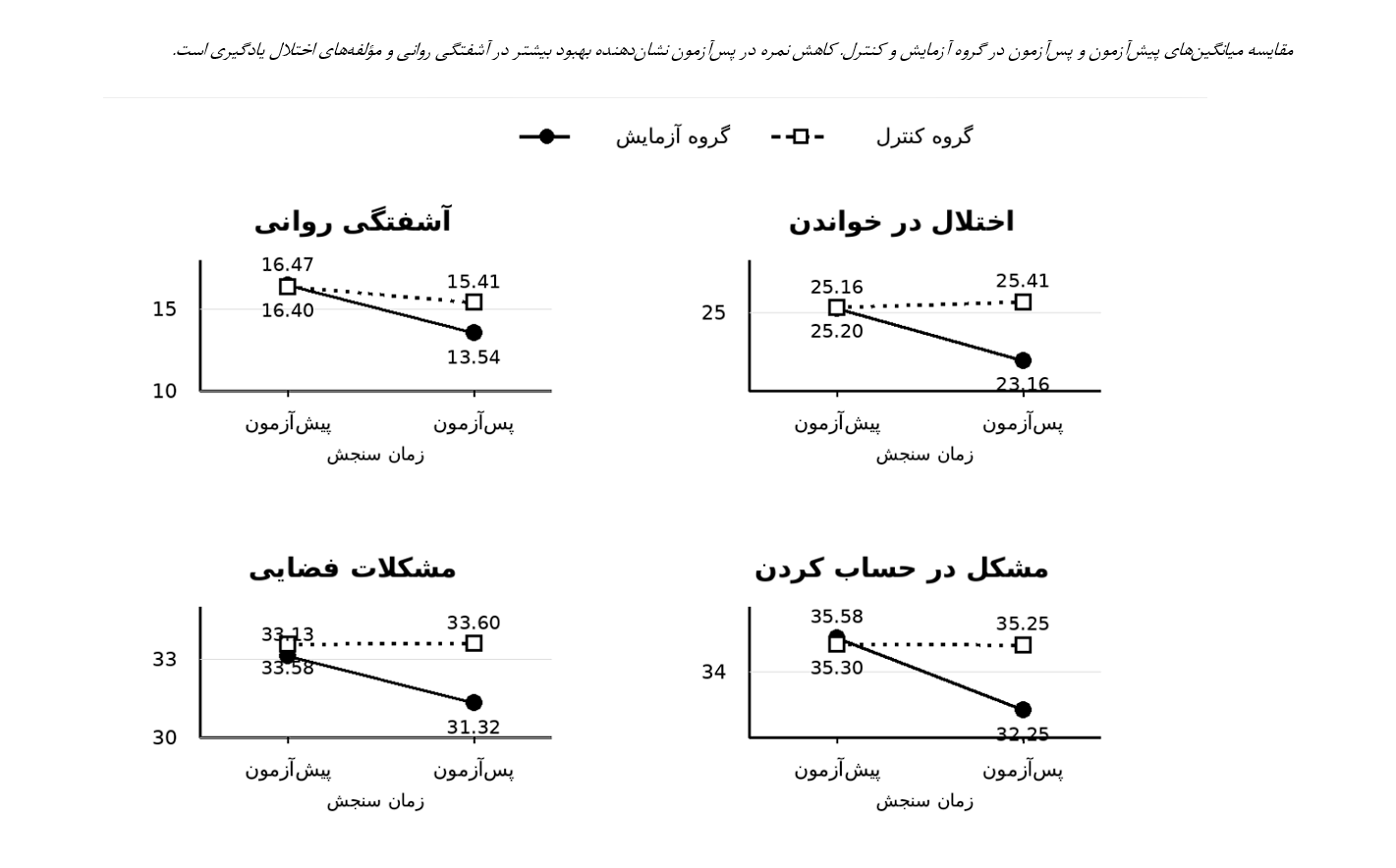
هدف پژوهش حاضر بررسی تأثیر مداخلات رواندرمانی خانوادهمحور بر بهبود مؤلفههای عملکرد یادگیری ذهنی (اختلال در خواندن، مشکلات فضایی و مشکل در حساب کردن) و کاهش آشفتگی روانی کودکان مبتلا به اختلالات روانی بستری در بیمارستان بود. روش پژوهش، نیمهآزمایشی با طرح پیشآزمون-پسآزمون و گروه کنترل بود. جامعه آماری شامل کودکان زیر ۱۰ سال مبتلا به اختلالات یادگیری و دارای آشفتگی روانی بود که در سال ۱۴۰۴ در بیمارستانهای دولتی شهر تهران بستری بودند. از میان افراد غربالشده، ۳۰ کودک واجد ملاکهای ورود انتخاب و بهصورت تصادفی در دو گروه آزمایش و کنترل، هر گروه ۱۵ نفر، جایگزین شدند. گروه آزمایش طی هشت جلسه ۴۵ دقیقهای در برنامه رواندرمانی خانوادهمحور شرکت کرد و گروه کنترل مداخلهای دریافت نکرد. ابزارهای پژوهش شامل پرسشنامه اختلالات یادگیری کلورادو و مقیاس اثر رویداد بازنگریشده بود. دادهها با استفاده از آمار توصیفی و تحلیل کوواریانس تکمتغیره تحلیل شدند. نتایج نشان داد که پس از کنترل اثر پیشآزمون، مداخله خانوادهمحور اثر معناداری بر کاهش آشفتگی روانی داشت (۵۳٫۶۳F =؛ ۰٫۰۰۱ p < ؛۰٫۹۸ η² =). همچنین اثر مداخله بر کاهش اختلال در خواندن معنادار بود(10٫82F =؛ ۰٫۰۱ p < ؛۰٫29 η² =). در مؤلفه مشکلات فضایی نیز تفاوت دو گروه معنادار گزارش شد (16٫۶4F =؛ ۰٫۰۰۱ p < ؛۰٫38 η² =). افزون بر این، مداخله بر کاهش مشکل در حساب کردن اثر معنادار داشت. (17٫78F =؛ ۰٫۰۰۱ p < ؛۰٫39 η² =). بر اساس یافتهها، رواندرمانی خانوادهمحور میتواند بهعنوان رویکردی مکمل برای کاهش آشفتگی روانی و بهبود برخی مؤلفههای یادگیری ذهنی در کودکان بستری مورد استفاده قرار گیرد.
مراجع
American Psychiatric, A. (2022). Diagnostic and statistical manual of mental disorders. American Psychiatric Association Publishing. https://doi.org/10.1176/appi.books.9780890425787
Beaton, M. C., Codina, G. N., & Wharton, J. C. (2021). Decommissioning normal: COVID-19 as a disruptor of school norms for young people with learning disabilities. British Journal of Learning Disabilities, 49(4), 393-402. https://doi.org/10.1111/bld.12399
Beck, J. G., Grant, D. M., Read, J. P., Clapp, J. D., Coffey, S. F., Miller, L. M., & Palyo, S. A. (2008). The Impact of Event Scale-Revised: Psychometric properties in a sample of motor vehicle accident survivors. Journal of Anxiety Disorders, 22(2), 187-198. https://doi.org/10.1016/j.janxdis.2007.02.002
Becvar, R. J., Becvar, D. S., & Reif, L. V. (2023). Systems theory and family therapy: A primer. Rowman & Littlefield. https://www.amazon.com/Systems-Theory-Family-Therapy-Raphael/dp/1538185679
Carr, A. (2025). Family therapy and systemic interventions for child-focused problems: The evidence base. Journal of Family Therapy, 47(1), e12476. https://doi.org/10.1111/1467-6427.12476
Creamer, M., Bell, R., & Failla, S. (2003). Psychometric properties of the Impact of Event Scale-Revised. Behaviour Research and Therapy, 41(12), 1489-1496. https://doi.org/10.1016/j.brat.2003.07.010
Dallos, R., & Vetere, A. (2021). Systemic therapy and attachment narratives: Applications in a range of clinical settings. Routledge. https://doi.org/10.4324/9781003080152
Degli Espinosa, F., Metko, A., Raimondi, M., Impenna, M., & Scognamiglio, E. (2020). A model of support for families of children with autism living in the COVID-19 lockdown: Lessons from Italy. Behavior Analysis in Practice, 13(3), 550-558. https://doi.org/10.1007/s40617-020-00438-7
Dubois-Comtois, K., Suffren, S., St-Laurent, D., Milot, T., & Lemelin, J. P. (2021). Child psychological functioning during the COVID-19 lockdown: An ecological, family-centered approach. Journal of Developmental & Behavioral Pediatrics, 42(7), 532-539. https://doi.org/10.1097/DBP.0000000000000935
Geary, D. C. (2010). Mathematical disabilities: Reflections on cognitive, neuropsychological, and genetic components. Learning and Individual Differences, 20(2), 130-133. https://doi.org/10.1016/j.lindif.2009.10.008
Hoagwood, K. E., Cavaleri, M. A., Olin, S. S., Burns, B. J., Slaton, E., Gruttadaro, D., & Hughes, R. (2010). Family support in children's mental health: A review and synthesis. Clinical Child and Family Psychology Review, 13(1), 1-45. https://doi.org/10.1007/s10567-009-0060-5
Horowitz, M. J., Wilner, N., & Alvarez, W. (1979). Impact of Event Scale: A measure of subjective stress. Psychosomatic Medicine, 41(3), 209-218. https://doi.org/10.1097/00006842-197905000-00004
Kazak, A. E., Kassam-Adams, N., Schneider, S., Zelikovsky, N., Alderfer, M. A., & Rourke, M. (2006). An integrative model of pediatric medical traumatic stress. Journal of Pediatric Psychology, 31(4), 343-355. https://doi.org/10.1093/jpepsy/jsj054
Kuo, D. Z., Houtrow, A. J., Arango, P., Kuhlthau, K. A., Simmons, J. M., & Neff, J. M. (2012). Family-centered care: Current applications and future directions in pediatric health care. Maternal and Child Health Journal, 16(2), 297-305. https://doi.org/10.1007/s10995-011-0751-7
Peterson, R. L., & Pennington, B. F. (2015). Developmental dyslexia. Annual Review of Clinical Psychology, 11, 283-307. https://doi.org/10.1146/annurev-clinpsy-032814-112842
Schwartz, A. E., Hopkins, B. G., & Stiefel, L. (2021). The effects of special education on the academic performance of students with learning disabilities. Journal of Policy Analysis and Management, 40(2), 480-520. https://doi.org/10.1002/pam.22282
Shields, L., Zhou, H., Pratt, J., Taylor, M., Hunter, J., & Pascoe, E. (2012). Family-centred care for hospitalised children aged 0-12 years. Cochrane Database of Systematic Reviews, 2012(10), CD004811. https://doi.org/10.1002/14651858.CD004811.pub3
Snowling, M. J., & Hulme, C. (2012). Interventions for children's language and literacy difficulties. International Journal of Language & Communication Disorders, 47(1), 27-34. https://doi.org/10.1111/j.1460-6984.2011.00081.x
Taibbi, R. (2022). Doing family therapy: Craft and creativity in clinical practice. Guilford Press. https://books.google.com/books?hl=en&lr=&id=ilZZEAAAQBAJ&oi=fnd&pg=PP1&dq=Taibbi,+R.+(2022).+Doing+family+therapy:+Craft+and+creativity+in+clinical+practice,+Guilford+Press.+%09&ots=FVo5YWIGHP&sig=sAhapWwxBRvzF6YCmg29g30yclQ
Weiss, D. S., & Marmar, C. R. (1997). Assessing psychological trauma and PTSD: A practitioner's handbook. Guilford Press. https://doi.org/10.1037/t12199-000
Willcutt, E. G., Boada, R., Riddle, M. W., Chhabildas, N., DeFries, J. C., & Pennington, B. F. (2011). Colorado Learning Difficulties Questionnaire: Validation of a parent-report screening measure. Psychological Assessment, 23(3), 778-791. https://doi.org/10.1037/a0023290
دانلود
گاهشمار انتشار
- ارسال
- بازنگری
- پذیرش
شماره
نوع مقاله
مجوز
حق نشر 2025 طناز بوستانچی کاشانی (نویسنده); علیرضا جرجندی رحمت آبادی; مریم افشاری حمید, فاطمه ولی پور صاحبی, مهاباد وطن خواه (نویسنده)

این پروژه تحت مجوز بین المللی Creative Commons Attribution-NonCommercial 4.0 می باشد.