The Effect of Eight Weeks of Aquatic Pilates Exercises on Motor Performance and Fear of Falling in Elderly Women
DOI:
https://doi.org/10.61838/kman.longevity.64Keywords:
Aquatic Pilates, Motor Performance, Fear of Movement, Elderly Women, Non-specific Chronic Low Back PainAbstract
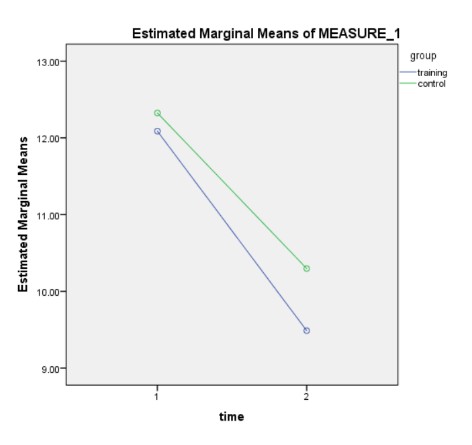
Non-specific chronic low back pain (NSCLBP) is a common condition among elderly women, affecting not only motor function but also cognitive and psychosocial performance. This study aimed to investigate the effect of selected aquatic Pilates exercises on motor and psychosocial performance in elderly women with NSCLBP. The research was conducted as a clinical trial using a pre-test/post-test design with a control group. From 58 initial volunteers, 28 eligible participants aged 60–70 were randomly assigned to experimental and control groups (14 each). The experimental group performed aquatic Pilates exercises—focused on core strengthening, flexibility, and balance—three times per week for eight weeks (60 minutes per session) in the pool of the Faculty of Physical Education, Kerman. Motor performance was assessed using the TUG and Tinetti tests, while psychosocial aspects were evaluated using the Tampa Scale for Kinesiophobia (TSK). Data were analyzed using repeated measures ANOVA. Results indicated significant improvement in motor performance over time in both groups, with no statistically significant difference between them. However, TSK scores revealed a significant interaction between time and group, suggesting that the intervention had a distinct effect on reducing fear of movement in the experimental group. These findings support the potential of aquatic Pilates as an effective intervention for improving motor and psychosocial outcomes in elderly women with NSCLBP.
References
Becker, G. S., & Becker, G. S. (2009). Accounting for tastes. Harvard University Press.
Benjuya, N., Melzer, I., & Kaplanski, J. (2004). Aging-induced shifts from a reliance on sensory input to muscle cocontraction during balanced standing. The Journals of Gerontology Series A: Biological Sciences and Medical Sciences, 59(2), M166-M171.
Bullo, V., Bergamin, M., Gobbo, S., Sieverdes, J., Zaccaria, M., Neunhaeuserer, D., & Ermolao, A. (2015). The effects of Pilates exercise training on physical fitness and wellbeing in the elderly: A systematic review for future exercise prescription. Preventive medicine, 75, 1-11.
Butler, A. A., Lord, S. R., Rogers, M. W., & Fitzpatrick, R. C. (2008). Muscle weakness impairs the proprioceptive control of human standing. Brain research, 1242, 244-251.
Cruz-Jentoft, A. J., Bahat, G., Bauer, J., Boirie, Y., Bruyère, O., Cederholm, T., Cooper, C., Landi, F., Rolland, Y., & Sayer, A. A. (2019). Sarcopenia: revised European consensus on definition and diagnosis. Age and ageing, 48(1), 16-31.
Cugusi, L., Manca, A., Bergamin, M., Di Blasio, A., Yeo, T. J., Crisafulli, A., & Mercuro, G. (2019). Zumba fitness and women's cardiovascular health: a systematic review. Journal of cardiopulmonary rehabilitation and prevention, 39(3), 153-160.
Erickson, K. I., Voss, M. W., Prakash, R. S., Basak, C., Szabo, A., Chaddock, L., Kim, J. S., Heo, S., Alves, H., & White, S. M. (2011). Exercise training increases size of hippocampus and improves memory. Proceedings of the national academy of sciences, 108(7), 3017-3022.
Hoy, D., March, L., Brooks, P., Blyth, F., Woolf, A., Bain, C., Williams, G., Smith, E., Vos, T., & Barendregt, J. (2014). The global burden of low back pain: estimates from the Global Burden of Disease 2010 study. Annals of the rheumatic diseases, 73(6), 968-974.
Kwok, M. M., So, B. C., Heywood, S., Lai, M. C., & Ng, S. S. (2022). Effectiveness of deep water running on improving cardiorespiratory fitness, physical function and quality of life: A systematic review. International journal of environmental research and public health, 19(15), 9434.
Niemann, C., Godde, B., & Voelcker-Rehage, C. (2014). Not only cardiovascular, but also coordinative exercise increases hippocampal volume in older adults. Frontiers in aging neuroscience, 6, 170.
Podsiadlo, D., & Richardson, S. (1991). The timed “Up & Go”: a test of basic functional mobility for frail elderly persons. Journal of the American geriatrics Society, 39(2), 142-148.
Wood, A. J., Graham, M., Lehdonvirta, V., & Hjorth, I. (2019). Good gig, bad gig: autonomy and algorithmic control in the global gig economy. Work, employment and society, 33(1), 56-75.
Downloads
Publication Timeline
- Submitted
- Revised
- Accepted
Issue
Section
License
Copyright (c) 2025 زینب یوسفی (نویسنده); منصور صاحب الزمانی; سعید بحیرایی (نویسنده)

This work is licensed under a Creative Commons Attribution-NonCommercial 4.0 International License.