مقایسه اثربخشی دو رویکرد بازی مشارکتی و رقابتی بر تبحر حرکتی و خودکارآمدی کودکان مبتلا به اختلال هماهنگی رشدی
کلمات کلیدی:
اختلال هماهنگی رشدی, خودکارآمدی, تبحر حرکتی, بازیهای مشارکتی, بازیهای رقابتیچکیده
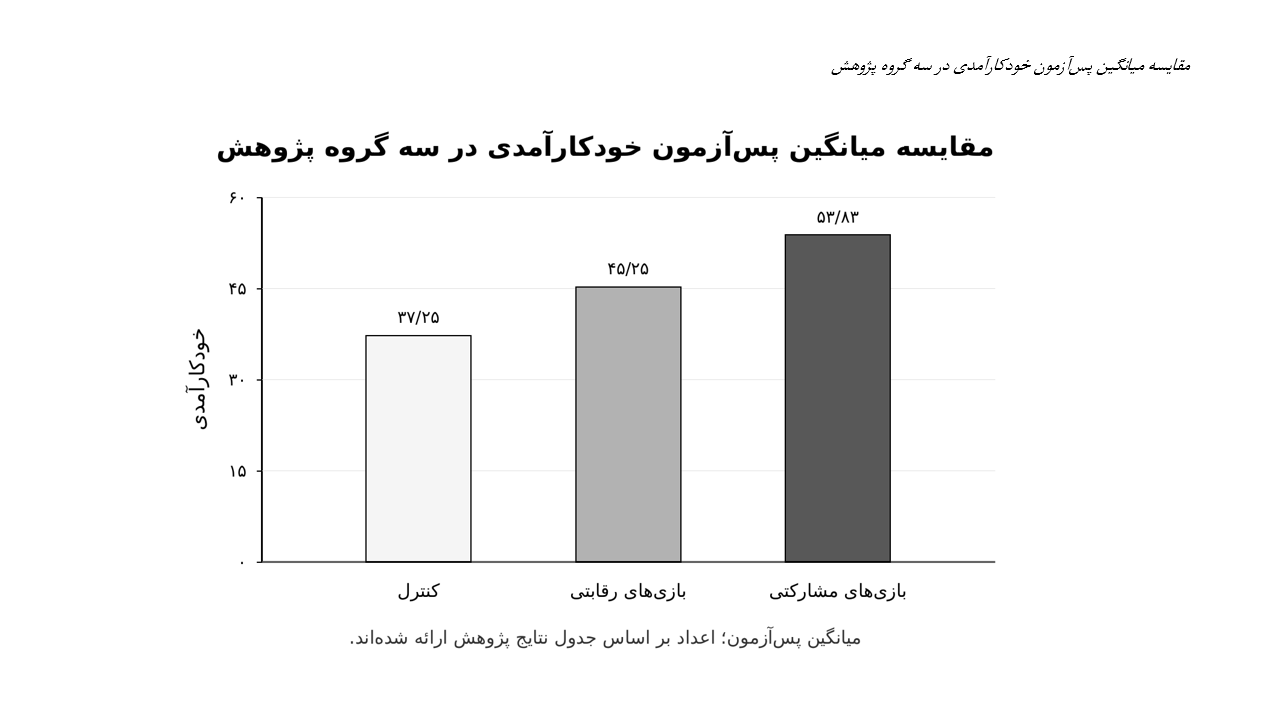
پژوهش حاضر با هدف مقایسه اثربخشی دو رویکرد بازیهای مشارکتی و رقابتی بر خودکارآمدی و تبحر حرکتی کودکان دارای نشانههای اختلال هماهنگی رشدی انجام شد. روش پژوهش نیمهآزمایشی با طرح پیشآزمون و پسآزمون و گروه گواه بود. جامعه آماری شامل دانشآموزان دختر ۹ تا ۱۲ ساله شهرستان خوی در سال تحصیلی ۱۴۰۱–۱۴۰۰ بود. ابتدا غربالگری اولیه با پرسشنامه DCDQ-07 و سپس تأیید عملکرد حرکتی پایین با آزمون MABC-2 انجام شد؛ همچنین بر اساس گزارش والدین و پرونده مدرسه، وجود اختلالات عصبی آشکار، ناتوانی ذهنی و مشکلات شدید بینایی یا پزشکی به عنوان ملاکهای خروج در نظر گرفته شد. از میان افراد واجد شرایط، ۳۶ نفر به روش نمونهگیری هدفمند انتخاب و بهصورت تصادفی در سه گروه بازیهای مشارکتی، بازیهای رقابتی و گواه قرار گرفتند. گروههای آزمایش طی ۲۴ جلسه ۴۵ دقیقهای، سه جلسه در هفته، برنامه بازیهای مشارکتی یا رقابتی را دریافت کردند و گروه گواه فقط برنامه معمول تربیت بدنی مدرسه را ادامه داد. ابزارهای پژوهش شامل MABC-2 برای غربالگری/تأیید مشکل حرکتی، فرم کوتاه BOT-2 برای سنجش تبحر حرکتی و مقیاس خودکارآمدی کودکان ویلر و لَد بود. دادهها با تحلیل کوواریانس و آزمون تعقیبی LSD تحلیل شدند. نتایج نشان داد هر دو رویکرد بازیمحور نسبت به گروه گواه موجب بهبود معنادار خودکارآمدی و تبحر حرکتی شدند، اما بازیهای مشارکتی اثر بیشتری نسبت به بازیهای رقابتی داشتند. این یافتهها نشان میدهد بازیهای مشارکتی میتوانند به عنوان رویکردی کمهزینه و مدرسهمحور برای ارتقای عملکرد حرکتی و باور کارآمدی کودکان دارای نشانههای DCD استفاده شوند؛ با این حال، به دلیل نبود مرحله پیگیری و حجم نمونه محدود، درباره پایداری بلندمدت اثرها باید با احتیاط داوری کرد.
مراجع
American Psychiatric, A. (2013). Diagnostic and statistical manual of mental disorders (5th ed.). American Psychiatric Publishing. https://doi.org/10.1176/appi.books.9780890425596
André, A., Deneuve, P., & Louvet, B. (2011). Cooperative learning in physical education and acceptance of students with learning disabilities. Journal of Applied Sport Psychology, 23(4), 474-485. https://doi.org/10.1080/10413200.2011.580826
Bandura, A. (1997). Self-efficacy: The exercise of control. W. H. Freeman.
Barrett, T. (2005). Effects of cooperative learning on performance of sixth-grade physical education students. Journal of Teaching in Physical Education, 24(1), 88-102. https://doi.org/10.1123/jtpe.24.1.88
Blank, R., Barnett, A. L., Cairney, J., Green, D., Kirby, A., Polatajko, H., Rosenblum, S., Smits-Engelsman, B., Sugden, D., Wilson, P., & Vinçon, S. (2019). International clinical practice recommendations on the definition, diagnosis, assessment, intervention, and psychosocial aspects of developmental coordination disorder. Developmental Medicine & Child Neurology, 61(3), 242-285. https://doi.org/10.1111/dmcn.14132
Bruininks, R. H., & Bruininks, B. D. (2005). Bruininks-Oseretsky Test of Motor Proficiency (2nd ed.). Pearson Assessment. https://doi.org/10.1037/t14991-000
Cairney, J., Hay, J. A., Faught, B. E., Wade, T. J., Corna, L., & Flouris, A. (2005). Developmental coordination disorder, generalized self-efficacy toward physical activity, and participation in organized and free play activities. The Journal of Pediatrics, 147(4), 515-520. https://doi.org/10.1016/j.jpeds.2005.05.013
Cairney, J., Rigoli, D., & Piek, J. (2013). Developmental coordination disorder and internalizing problems in children: The environmental stress hypothesis elaborated. Developmental Review, 33(3), 224-238. https://doi.org/10.1016/j.dr.2013.07.002
Erskine, N., Barratt, J., & Cairney, J. (2024). Paediatric motor difficulties and internalising problems: An integrative review on the environmental stress hypothesis. Frontiers in Pediatrics, 12, 1320338. https://doi.org/10.3389/fped.2024.1320338
Farhat, F., Denysschen, M., Mezghani, N., Kammoun, M. M., Gharbi, A., Rebai, H., & et al. (2024). Activities of daily living, self-efficacy and motor skill related fitness and the interrelation in children with moderate and severe developmental coordination disorder. PLOS ONE, 19(4), e0299646. https://doi.org/10.1371/journal.pone.0299646
Gallahue, D. L. (2010). Understanding motor development in children and youth. Proceedings of the 6th International Scientific and Expert Symposium "Contemporary Views on the Motor Development of a Child",
Grineski, S. (1996). Cooperative learning in physical education. Human Kinetics.
Henderson, S. E., Sugden, D. A., & Barnett, A. L. (2007). Movement Assessment Battery for Children (2nd ed.). Pearson. https://doi.org/10.1037/t55281-000
Hosseinchari, M. (2008). A comparison of perceived self-efficacy for social interactions in male and female junior high school students. [Journal/source details should be completed if available]. https://www.sid.ir/paper/67642/en
Karabak, M., Akıncı, M. A., Yıldırım Demirdöğen, E., & Bozkurt, A. (2025). Prevalence and associated factors of developmental coordination disorder in primary school children. European Child & Adolescent Psychiatry, 34(2), 779-790. https://doi.org/10.1007/s00787-024-02526-3
Mohammadzadeh, S., Habibifar, F., Ramezanzade, H., Jafarzadeh, M., Rabavi, A., Kurnaz, M., & et al. (2025). The effect of a play-centered SPARK physical education program on motor proficiency and self-efficacy in children with developmental coordination disorder. Sport Sciences for Health, 21(3), 1613-1621. https://doi.org/10.1007/s11332-025-01385-y
Nobre, G. C., Valentini, N. C., Ramalho, M. H., & Sartori, R. F. (2019). Self-efficacy profile in daily activities: Children at risk and with developmental coordination disorder. Pediatrics & Neonatology, 60(6), 662-668. https://doi.org/10.1016/j.pedneo.2019.03.012
Ojeda-Troncoso, N., & Campos-Campos, K. (2025). Adapted sports-based games with cooperative and competitive approaches on social and motor skills in early primary school students. Perceptual and Motor Skills, 132(6), 1332-1350. https://doi.org/10.1177/00315125251342622
Rivard, L., Pollock, N., Siemon, J., & Missiuna, C. (2016). Developmental coordination disorder. In Campbell's physical therapy for children (5th ed.). Elsevier. https://books.google.com/books?hl=en&lr=&id=ruJgDwAAQBAJ&oi=fnd&pg=PA398&dq=Rivard,+L.,+et+al.+(2016).+Developmental+coordination+disorder.+Campbell%27s+physical+therapy+for+children,+Elsevier.+%09&ots=ApgNduc_3Y&sig=XDSE88ibsii0x5R0Q2WsY1VFM0M
Vanden Auweele, Y., Bakker, F., Biddle, S., Durand, M., & Seiler, R. (1999). Psychology for physical educators. Human Kinetics.
Wheeler, V. A., & Ladd, G. W. (1982). Assessment of children's self-efficacy for social interactions with peers. Developmental Psychology, 18(6), 795-805. https://doi.org/10.1037/0012-1649.18.6.795
Zwicker, J. G., Missiuna, C., Harris, S. R., & Boyd, L. A. (2012). Developmental coordination disorder: A review and update. European Journal of Paediatric Neurology, 16(6), 573-581. https://doi.org/10.1016/j.ejpn.2012.05.005
Zwicker, J. G., Suto, M., Harris, S. R., Vlasakova, N., & Missiuna, C. (2018). Developmental coordination disorder is more than a motor problem: Children describe the impact of daily struggles on their quality of life. British Journal of Occupational Therapy, 81(2), 65-73. https://doi.org/10.1177/0308022617735046
دانلود
گاهشمار انتشار
- ارسال
- بازنگری
- پذیرش
شماره
نوع مقاله
مجوز
حق نشر 2025 زهرا گلصنملو (نویسنده); مهدیه قره لر

این پروژه تحت مجوز بین المللی Creative Commons Attribution-NonCommercial 4.0 می باشد.