اثربخشی درمان متمرکز بر شفقت (CFT) بر بهبود عزت نفس و کاهش احساس شرم در زنان دارای اضطراب اجتماعی
کلمات کلیدی:
درمان متمرکز بر شفقت, عزت نفس, احساس شرم, اضطراب اجتماعی, زنانچکیده
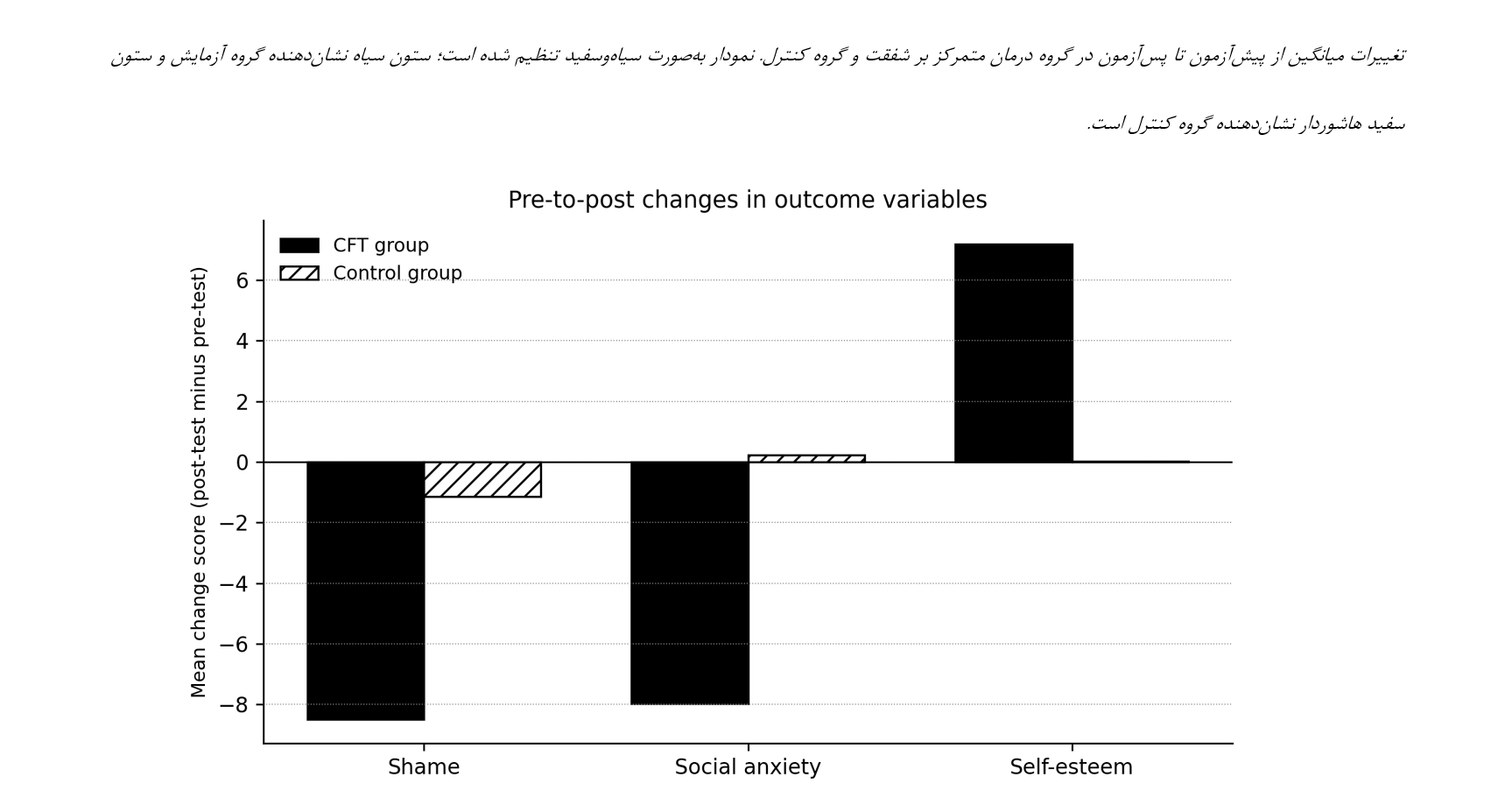
هدف پژوهش حاضر بررسی اثربخشی درمان متمرکز بر شفقت (CFT) بر بهبود عزت نفس و کاهش احساس شرم در زنان دارای اضطراب اجتماعی بود. روش پژوهش نیمهآزمایشی با طرح پیشآزمون-پسآزمون و گروه کنترل بود. جامعه آماری شامل زنان دارای نشانگان اضطراب اجتماعی بود و ۴۰ نفر واجد ملاکهای ورود بهصورت تصادفی در دو گروه آزمایش و کنترل قرار گرفتند. گروه آزمایش در هشت جلسه ۶۰ دقیقهای درمان متمرکز بر شفقت شرکت کرد و گروه کنترل در این مدت مداخلهای دریافت نکرد. ابزارهای پژوهش شامل مقیاس عزت نفس روزنبرگ، پرسشنامه اضطراب اجتماعی کانر و همکاران و مقیاس حالت شرم و احساس گناه بود. دادهها با استفاده از آمار توصیفی و تحلیل کوواریانس در نرمافزار SPSS نسخه ۲۴ تحلیل شدند. نتایج نشان داد درمان متمرکز بر شفقت باعث کاهش معنادار احساس شرم، کاهش معنادار اضطراب اجتماعی و افزایش معنادار عزت نفس در گروه آزمایش نسبت به گروه کنترل شد. اندازه اثر برای احساس شرم، اضطراب اجتماعی و عزت نفس بهترتیب ۰٫۳۹، ۰٫۴۰ و ۰٫۳۷ گزارش شد. بر این اساس، درمان متمرکز بر شفقت میتواند با کاهش خودانتقادی، تقویت خودمهربانی و افزایش پذیرش هیجانی، در بهبود مؤلفههای روانشناختی زنان دارای اضطراب اجتماعی نقش مؤثری داشته باشد.
مراجع
Beaumont, E., Irons, C., Rayner, G., & Dagnall, N. (2016). Does compassion-focused therapy training for health care educators and providers increase self-compassion and reduce self-persecution and self-criticism? Journal of Continuing Education in the Health Professions, 36(1), 4-10. https://doi.org/10.1097/CEH.0000000000000023
Boersma, K., Håkanson, A., Salomonsson, E., & Johansson, I. (2015). Compassion focused therapy to counteract shame, self-criticism and isolation: A replicated single case experimental study for individuals with social anxiety. Journal of Contemporary Psychotherapy, 45, 89-98. https://doi.org/10.1007/s10879-014-9286-8
Connor, K. M., Davidson, J. R. T., Churchill, L. E., Sherwood, A., Foa, E., & Weisler, R. H. (2000). Psychometric properties of the Social Phobia Inventory (SPIN): New self-rating scale. British Journal of Psychiatry, 176, 379-386. https://doi.org/10.1192/bjp.176.4.379
Craig, C., Hiskey, S., & Spector, A. (2020). Compassion focused therapy: A systematic review of its effectiveness and acceptability in clinical populations. Expert Review of Neurotherapeutics, 20(4), 385-400. https://doi.org/10.1080/14737175.2020.1746184
De Prada, E., Mareque, M., & Pino-Juste, M. (2024). Self-esteem among university students: How it can be improved through teamwork skills. Education Sciences, 14(1), 108. https://doi.org/10.3390/educsci14010108
Evans, R., Chiu, K., Clark, D. M., Waite, P., & Leigh, E. (2021). Safety behaviours in social anxiety: An examination across adolescence. Behaviour Research and Therapy, 144, 103931. https://doi.org/10.1016/j.brat.2021.103931
Hendrawan, R., Nastiti, T., Almahendra, R., & Rosari, R. (2025). Linking soft and hard skills to career attitudes: The mediating role of self-esteem in experiential learning programs. Higher Education, Skills and Work-Based Learning, 15(6), 1263-1281. https://doi.org/10.1108/HESWBL-11-2024-0358
Hosseini-Mehr, N., Khezri-Moghaddam, N., & Pourehsan, S. (2021). The effectiveness of compassion-based training on social self-efficacy, distress tolerance, and self-criticism in adolescent girls under the supervision of the Welfare Organization. Journal of Positive Psychology, 7(2), 33-48.
Levinson, C. A., Byrne, M., & Rodebaugh, T. L. (2016). Shame and guilt as shared vulnerability factors: Shame, but not guilt, prospectively predicts both social anxiety and bulimic symptoms. Eating Behaviors, 22, 188-193. https://doi.org/10.1016/j.eatbeh.2016.06.016
Ludwig, S., Fellner-Röhling, G., & Thoma, C. (2017). Do women have more shame than men? An experiment on self-assessment and the shame of overestimating oneself. European Economic Review, 92, 31-46. https://doi.org/10.1016/j.euroecorev.2016.11.007
Marschall, D., Sanftner, J., & Tangney, J. P. (1994). The State Shame and Guilt Scale. George Mason University.
Millard, L. A., Wan, M. W., Smith, D. M., & Wittkowski, A. (2023). The effectiveness of compassion focused therapy with clinical populations: A systematic review and meta-analysis. Journal of Affective Disorders, 326, 168-192. https://doi.org/10.1016/j.jad.2023.01.010
Rajabi, G., & Bohlool, N. (2007). Assessing the reliability and validity of the Rosenberg Self-Esteem Scale in first-year students of Shahid Chamran University. Educational and Psychological Research, 3(2), 33-48.
Rosenberg, M. (1965). Society and the adolescent self-image. Princeton University Press. https://doi.org/10.1515/9781400876136
Soleimanpour, M., Pirkhaefi, A., & Zahrakar, K. (2022). Comparison of the effectiveness of acceptance and commitment therapy (ACT) and compassion-focused therapy (CFT) on internalized shame in patients with vitiligo. Scientific Journal of Ilam University of Medical Sciences, 30(2), 82-96.
Varmaghani, H., Poursharifi, H., Soleimani, A., & Fathi-Ashtiani, A. (2022). Psychometric properties of the Persian version of the State Shame and Guilt Scale in students. Knowledge and Research in Applied Psychology, 23(2), 1-10.
دانلود
گاهشمار انتشار
- ارسال
- بازنگری
- پذیرش
شماره
نوع مقاله
مجوز
حق نشر 2025 خاطره ابراهیمیان (نویسنده); محبوبه صابری; مریم نیکخوی, مهناز سنجری, مهاباد وطنخواه (نویسنده)

این پروژه تحت مجوز بین المللی Creative Commons Attribution-NonCommercial 4.0 می باشد.