اثربخشی درمان کاهش استرس مبتنی بر ذهن آگاهی بر پذیرش بدون قضاوت، مردم آمیزی و احساس امنیت فردی در افراد با اختلال اضطراب فراگیر
کلمات کلیدی:
درمان کاهش استرس مبتنی بر ذهن آگاهی, پذیرش بدون قضاوت, مردم آمیزی, احساس امنیت فردی, اختلال اضطراب فراگیرچکیده
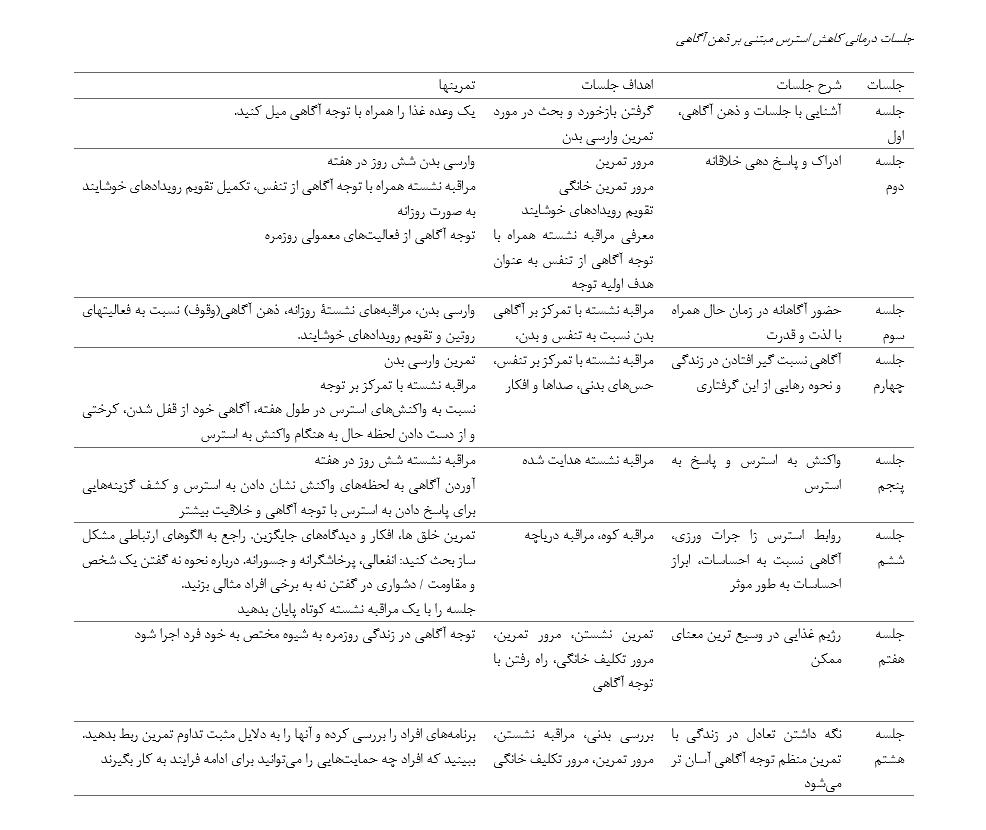
هدف پژوهش حاضر تعیین اثربخشی درمان کاهش استرس مبتنی بر ذهنآگاهی بر پذیرش بدون قضاوت، مردمآمیزی و احساس امنیت فردی در افراد مبتلا به اختلال اضطراب فراگیر بود. این پژوهش به روش نیمهآزمایشی با طرح پیشآزمون–پسآزمون با گروه گواه انجام شد. از میان افراد مبتلا به اختلال اضطراب فراگیر مراجعهکننده به یک مرکز خدمات روانشناسی و مشاوره در شهر تهران، 30 نفر به روش نمونهگیری هدفمند انتخاب و بهصورت تصادفی در دو گروه آزمایش و گواه (هر گروه 15 نفر) گمارش شدند. پس از ریزش نمونه، دادههای 24 شرکتکننده (12 نفر در هر گروه) مورد تحلیل قرار گرفت. گروه آزمایش طی هشت جلسه 90 دقیقهای درمان کاهش استرس مبتنی بر ذهنآگاهی همراه با تمرین روزانه در منزل دریافت کرد، در حالی که گروه گواه هیچگونه مداخله فعالی دریافت نکرد. دادهها با استفاده از تحلیل کوواریانس چندمتغیره و تکمتغیره تحلیل شدند. نتایج تحلیل کوواریانس چندمتغیره نشان داد که بین دو گروه در ترکیب متغیرهای وابسته تفاوت معناداری وجود دارد (F(3,17)=15.232، P=0.001، Partial η²=0.877). همچنین، تحلیلهای تکمتغیره نشان داد درمان کاهش استرس مبتنی بر ذهنآگاهی موجب بهبود معنادار پذیرش بدون قضاوت (F=15.982، P=0.001، Partial η²=0.776)، مردمآمیزی (F=10.414، P=0.002، Partial η²=0.395) و احساس امنیت فردی (F=13.795، P=0.001، Partial η²=0.633) در مقایسه با گروه گواه شد. یافتهها نشان میدهد درمان کاهش استرس مبتنی بر ذهنآگاهی میتواند با افزایش پذیرش بدون قضاوت، بهبود مردمآمیزی در معنای گرایش به تعاملات اجتماعی و ارتقای احساس امنیت فردی در افراد مبتلا به اختلال اضطراب فراگیر همراه باشد. با این حال، با توجه به حجم نمونه محدود، نبود گروه کنترل فعال، فقدان دوره پیگیری و برخی محدودیتهای روششناختی، نتایج باید با احتیاط تفسیر شوند و انجام مطالعات تصادفی کنترلشده با حجم نمونه بیشتر و دوره پیگیری طولانیتر برای تأیید این یافتهها ضروری است.
مراجع
Aghababaei, N., Hatami, J., & Rostami, R. (2011). The role of individual characteristics and judgment pattern in attitudes toward euthanasia. Iranian Journal of Critical Care Nursing, 4(1), 23-32. https://www.sid.ir/fileserver/jf/40113900104
Ahmadpour, H., & Akbari, K. (2022). Relationship between parenting styles and sociability in preschool children. Quarterly Journal of Educational Psychology, 18(64), 70-85.
Aluja, A., Rossier, J., García, L. F., Angleitner, A., Kuhlman, M., & Zuckerman, M. (2006). A cross-cultural shortened form of the ZKPQ (ZKPQ-50-CC) adapted to English, French, German, and Spanish languages. Personality and Individual Differences, 41(4), 619-628. https://doi.org/10.1016/j.paid.2006.03.001
Baer, R. A., Smith, G. T., & Allen, K. B. (2004). Assessment of mindfulness by self-report: The Kentucky Inventory of Mindfulness Skills. Assessment, 11(3), 191-206. https://doi.org/10.1177/1073191104268029
Bartlett, L., Lee, C., & Chen, J. (2019). Mindfulness-based stress reduction improves social anxiety and emotion regulation in adults: A randomized controlled trial. Journal of Anxiety Disorders, 64, 1-9.
Dehghan Manshadi, M., Dibazar, S., Heydari, Y., & Kalantarzadeh, F. (2021). Effectiveness of mindfulness-based cognitive therapy on reducing stress and perfectionism in female students. Toloo-e-Behdasht, 20(1), 69-79. https://www.sid.ir/paper/965464/
Farhadi, M., & Amini, R. (2019). The relationship between social self-efficacy and sociability with academic stress in students. Journal of Behavioral Sciences, 7(2), 115-128.
Ghasemi, M., & Karimi, Y. (2016). The role of sociability in resilience and mental health of students. Journal of Clinical Psychology, 8(3), 21-35.
Hasani, F., Fathaloloomi, A., Najafi, A., & Askari, Z. (2021). Investigating the role of physical appearance perfectionism, unconditional self-acceptance and quality of life in demand for rhinoplasty surgery. Research in Medicine, 45(1), 60-63. https://pejouhesh.sbmu.ac.ir/article-1-2129-fa.pdf
Hawkley, L. C., & Cacioppo, J. T. (2003). Loneliness, social isolation, and social support: Depicting these relationships and their perceived health implications. Health Psychology, 22(4), 407-417.
Kabat-Zinn, J. (2005). Full Catastrophe Living: Using the Wisdom of Your Body and Mind to Face Stress, Pain, and Illness (2nd ed.). Delacorte Press. https://psycnet.apa.org/record/2006-04192-000
Lee, R. M., Draper, M., & Lee, S. (2001). Development and validation of the social connectedness and intimacy scale. Journal of Counseling Psychology, 48(2), 201-214. https://doi.org/10.1037/0022-0167.48.3.310
Magen, R., & Smetana, J. G. (1999). Parenting styles and social reasoning. Child Development, 70(5), 1133-1145.
Makarem, M., & Yousefi, Z. (2021). Effectiveness of psychodrama group therapy on assertiveness, unconditional self-acceptance and gratitude in individuals with physical-motor disabilities: a quasi-experimental study. Journal of Rafsanjan University of Medical Sciences, 20(6), 681-696. https://www.sid.ir/fa/VEWSSID/J_pdf/lk65614000606.pdf
Najafi, M., & Rostami, J. (2023). Investigating the relationship between life satisfaction and sociability in the elderly. Journal of Geriatric Psychology, 6(4), 55-69.
Oraki, M., Alipour, A., & Dehkhodaei, S. (2021). Comparing the effectiveness of ACT and MBSR with neurofeedback on anxiety sensitivity and perceived stress in diabetic patients. Clinical Psychology.
Rezaei, A., & Ahmadi, F. (2018). Predicting sociability based on attachment styles in high school students. Quarterly Journal of Social Psychology, 12(46), 88-101.
Saberi, Z., & Rezaeian, G. (2022). The mediating role of perceived social support in the relationship between sociability and quality of life. Journal of Clinical Psychology, 14(2), 95-110.
Shibani, F., Dabbaghi, P., Najafi, S., & Rajaee Nejad, M. (2022). Effectiveness of mindfulness-based stress reduction therapy on patients with chronic pain: a randomized clinical trial. Iranian Journal of Psychiatry and Clinical Psychology, 28(2), 182-195. https://www.sid.ir/paper/1071010/fa
Shirey, M. R. (2004). Social connectedness: Development of a concept. Advances in Nursing Science, 27(1), 4-14.
Turner, R. J., Marino, F., & Manis, K. (1994). Social support and depression: A prospective analysis. Journal of Health and Social Behavior, 35(3), 205-217. https://doi.org/10.2307/2137276
Yazdani, S., & Hashemi, N. (2020). The effect of social skills training on increasing sociability and reducing social anxiety in adolescents. Journal of School Psychology, 9(1), 110-125.
Zuckerman, M., Kuhlman, D. M., Joireman, J., Teta, P., & Kraft, M. (1993). A comparison of three structural models for personality: The Big Three, the Big Five, and the Alternative Five. Journal of Personality and Social Psychology, 65(4), 757-768. https://doi.org/10.1037/0022-3514.65.4.757
دانلودها
گاهشمار انتشار
- ارسال
- بازنگری
- پذیرش
شماره
نوع مقاله
مجوز
حق نشر 2025 شیوا مست علی (نویسنده); مهریار عناصری

این پروژه تحت مجوز بین المللی Creative Commons Attribution-NonCommercial 4.0 می باشد.