رابطه خودکارآمدی و شفقت به خود با پیروی از درمان بیماران مبتلا به دیابت شهر تهران
DOI::
https://doi.org/10.61838/kman.longevity.71کلمات کلیدی:
خودکارآمدی, شفقت به خود, پیروی از درمان, دیابت, بیماران دیابتیچکیده
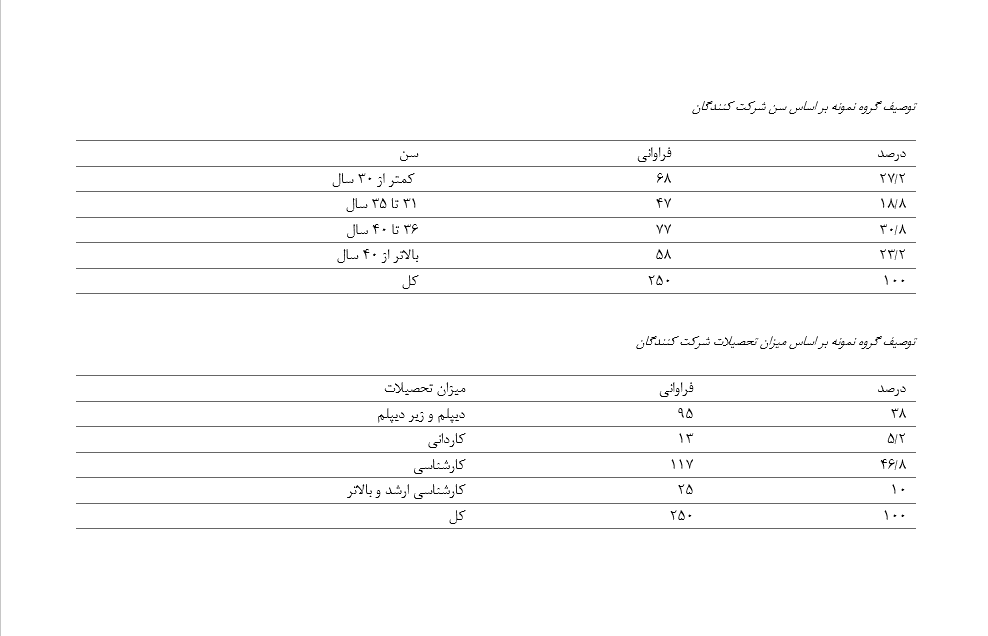
هدف پژوهش حاضر بررسی رابطه بین خودکارآمدی و شفقت به خود با پیروی از درمان در بیماران مبتلا به دیابت شهر تهران بود. پژوهش حاضر از نوع کاربردی و با روش توصیفی-همبستگی انجام شد. جامعه آماری شامل تمامی زنان عضو انجمن دیابت شهر تهران در نیمه دوم سال 1402 بود که از میان آنان 250 نفر به شیوه هدفمند انتخاب شدند. دادهها با استفاده از پرسشنامه پیروی از درمان فاطمی، مقیاس خودکارآمدی عمومی شوارتزر و جروسالم و پرسشنامه شفقت به خود نف گردآوری شد. برای تحلیل دادهها از آمار توصیفی شامل میانگین و انحراف استاندارد و در بخش استنباطی از تحلیل رگرسیون چندمتغیره، تحلیل واریانس چندمتغیره و آزمون تی مستقل با استفاده از نرمافزار SPSS نسخه 21 استفاده شد. نتایج تحلیل رگرسیون نشان داد که خودکارآمدی به طور مثبت و معنادار پیروی از درمان را پیشبینی میکند (β=0.152, p<0.01) و حدود 22.8 درصد از واریانس پیروی از درمان را تبیین نمود. همچنین با ورود متغیر شفقت به خود به مدل، میزان تبیین واریانس به 29.1 درصد افزایش یافت و شفقت به خود نیز به صورت مثبت و معنادار پیروی از درمان را پیشبینی کرد (β=0.256, p<0.01). یافتهها نشان دادند که زنان دارای سطوح بالاتر خودکارآمدی و شفقت به خود، پایبندی بیشتری به توصیهها و برنامههای درمانی داشتند. بر اساس یافتههای پژوهش، خودکارآمدی و شفقت به خود از عوامل روانشناختی مؤثر بر افزایش پیروی از درمان در بیماران مبتلا به دیابت هستند. بنابراین تقویت این متغیرها از طریق مداخلات آموزشی و روانشناختی میتواند موجب ارتقای رفتارهای خودمراقبتی و بهبود روند درمان بیماران دیابتی شود. توجه به مؤلفههای روانشناختی در کنار درمانهای پزشکی میتواند نقش مهمی در کاهش عوارض بیماری و ارتقای کیفیت زندگی این بیماران ایفا کند.
مراجع
Abdollahi, B. (2006). The Role of Self-Efficacy in Employee Empowerment. Tadbir(168), 35-40.
Ahmadpour, Dizaji, Zahrakar, K., & Kiamanesh, A. (2017). Comparison of the Effectiveness of Compassion-Focused Therapy and Well-Being Therapy on Psychological Capital of Female Students with Romantic Breakup. Woman and Culture, 9(31), 7-21.
Akin, A. (2010). Self-Compassion and Loneliness. International online journal of educational sciences, 2(3), 702-718.
Allen, A. B., Goldwasser, E. R., & Leary, M. R. (2012). Self-Compassion and Well-Being among Older Adults. Self and identity, 11(4), 428-453.
Babaei Garmkhani, M., Kassaei, A., Zahrakar, K., & Asadpour, E. (2019). Effectiveness of Compassion-Based Group Counseling on Emotion Regulation Strategies and Marital Satisfaction in Unfaithful Women with Cyber Infidelity. Family Counseling and Psychotherapy, 9(2), 73-92.
Bandura, A. (1997). Self-Efficacy: Toward a Unifying Theory of Behavior Change. Psychological review, 84, 191-215.
Benzo, R., Kirsch, J., Abascal-Bolado, B., & Dulohery, M. M. (2015). Impact of Self-Compassion on Quality of Life, Emotions and Self-Management Abilities in COPD. American Journal of Respiratory and Critical Care Medicine,
Braehler, C., Gumley, A., Harper, J., Wallace, S., Norrie, J., & Gilbert, P. (2013). Exploring Change Processes in Compassion Focused Therapy in Psychosis: Results of a Feasibility Randomized Controlled Trial. British Journal of Clinical Psychology, 52(2), 199-214.
Brown, B. L. (1999). Self-Efficacy Beliefs and Career Development. ERIC Digest(205).
Collins, R. N., Gilligan, L. J., & Poz, R. (2018). The Evaluation of a Compassion-Focused Therapy Group for Couples Experiencing a Dementia Diagnosis. Clinical Gerontologist, 41(5), 474-486.
Danucalov, M. A. D., Kozasa, E. H., Afonso, R. F., Galduroz, J. C. F., & Leite, J. R. (2017). Yoga and Compassion Meditation Program Improve Quality of Life and Self-Compassion in Family Caregivers of Alzheimer's Disease Patients: A Randomized Controlled Trial. Geriatrics & Gerontology International, 17(1), 85-91.
Darvishi, S., & Khayatan, F. (2017). The Effect of Self-Compassion Training on Happiness and Quality of Life among Mothers of Children with Autism. Exceptional Children, 17(4), 119-128.
Ehret, A. M., Joormann, J., & Berking, M. (2015). Examining Risk and Resilience Factors for Depression: The Role of Self-Criticism and Self-Compassion. Cognition and Emotion, 29(8), 1496-1504.
Ekhtiari Sadegh, M., Imani Naeini, M., & Mirzamohammadi, M. H. (2018). Predicting Loneliness in Elderly Men in Kermanshah Based on Self-Compassion, Spirituality, and Islamic Lifestyle. Journal of Research on Religion and Health, 4(2), 69-80.
Farokhzadian, A. A., & Mir Derikvand, F. (2017). Effectiveness of Self-Compassion-Focused Therapy on Increasing Psychological Well-Being and Reducing Depression in Older Adults. Aging Psychology, 3(4), 293-302.
Garcia, J. N., & Decaso, A. M. (2006). Changes in Writing Self-Efficacy and Writing Products and Processes through Specific Training in the Self-Efficacy Beliefs of Students with Learning Disabilities. Contemporary Educational Psychology.
Ghanavati, S. A., Bahrami, F., Goodarzi, K., & Roozbehani, M. (2018). Effectiveness of Compassion-Based Therapy on Quality of Life and Happiness in Women with Breast Cancer in Ahvaz. Nursing Education, 7(2), 53-61.
Ghasemi, M., Bagheri, F., & Kiamanesh, A. (2019). Comparison of the Effectiveness of Group Therapy Based on Mindfulness and Acceptance and Commitment Techniques (ACT) on Forgiveness, Emotional Regulation and Marital Intimacy. Bioethics Journal, 8(29), 87-98.
Gilbert, P. (2014). The Origins and Nature of Compassion Focused Therapy. British Journal of Clinical Psychology, 53(1), 6-41.
Hamidipour, R. (2004). Relationship between School Climate and Personal Efficacy of School Counselors Tarbiat Moallem University].
Hashemian, F. (2010). Relationship between Self-Efficacy and Employee Stress in the Agricultural Jihad Organization of Qom University of Qom Campus].
Heriot-Maitland, C., Vidal, J. B., Ball, S., & Irons, C. (2014). A Compassionate-Focused Therapy Group Approach for Acute Inpatients: Feasibility, Initial Pilot Outcome Data, and Recommendations. British Journal of Clinical Psychology, 53(1), 78-94.
Imtiaz, S. (2016). Rumination, Optimism, and Psychological Well-Being among the Elderly: Self-Compassion as a Predictor. Journal of Behavioural Sciences, 26(1), 32-50.
Irons, C., & Lad, S. (2017). Using Compassion Focused Therapy to Work with Shame and Self-Criticism in Complex Trauma. Australian Clinical Psychologist, 3(1), 1743.
Jackson, J. (2002). Enhancing Self-Efficacy and Learning Performance. Journal of Experimental Education, 3, 243-254.
Judge, L., Cleghorn, A., McEwan, K., & Gilbert, P. (2012). An Exploration of Group-Based Compassion Focused Therapy for a Heterogeneous Range of Clients Presenting to a Community Mental Health Team. International Journal of Cognitive Therapy, 5(4), 420-429.
Kelly, A. C., Wisniewski, L., Martin-Wagar, C., & Hoffman, E. (2017). Group-Based Compassion-Focused Therapy as an Adjunct to Outpatient Treatment for Eating Disorders: A Pilot Randomized Controlled Trial. Clinical Psychology & Psychotherapy, 24(2), 475-487.
Kurbanoglu, S. S., Akkoyunlu, B., & Umay, A. (2006). Developing the Information Literacy Self-Efficacy Scale. Journal of Documentation, 62(6), 730-743.
Leaviss, J., & Uttley, L. (2015). Psychotherapeutic Benefits of Compassion-Focused Therapy: An Early Systematic Review. Psychological medicine, 45(5), 927-945.
Mir Samiei, M. (2006). Relationship between Self-Efficacy, Social Support, and Test Anxiety with Mental Health among Male and Female Students of Allameh Tabataba'i University Allameh Tabataba'i University].
Mohammadkhani, P. (2001). Occupational Stress Sources among a Group of Welfare Organization Personnel in Iran. Rehabilitation Journal, 1(1), 1-11.
Monteiro, F., Fonseca, A., Pereira, M., Alves, S., & Canavarro, M. C. (2019). What Protects At-Risk Postpartum Women from Developing Depressive and Anxiety Symptoms? The Role of Acceptance-Focused Processes and Self-Compassion. Journal of affective disorders, 246, 522-529.
Muris, P. (2002). Relationship between Self-Efficacy and Symptoms of Anxiety Disorder and Depression in a Normal Adolescent Sample. Personality and individual differences, 32, 337-348.
Navab, M., Dehghani, A., & Salehi, M. (2018). Effect of Compassion-Based Group Therapy on Quality of Life and Changes in Goals and Priorities among Mothers of Children with Attention-Deficit/Hyperactivity Disorder. Child Mental Health, 5(1), 127-137.
Neff, K. D. (2016). The Self-Compassion Scale Is a Valid and Theoretically Coherent Measure of Self-Compassion. Mindfulness, 7(1), 264-274.
Nery-Hurwit, M., Yun, J., & Ebbeck, V. (2018). Examining the Roles of Self-Compassion and Resilience on Health-Related Quality of Life for Individuals with Multiple Sclerosis. Disability and Health Journal, 11(2), 256-261.
Pajares, F., & Schunk, D. H. (2002). The Development of Academic Self-Efficacy. American Anthropologist, 22-38.
Pauley, G., & McPherson, S. (2010). The Experience and Meaning of Compassion and Self-Compassion for Individuals with Depression or Anxiety. Psychology and Psychotherapy: Theory, Research and Practice, 83(2), 129-143.
Raes, F. (2010). Rumination and Worry as Mediators of the Relationship between Self-Compassion and Depression and Anxiety. Personality and individual differences, 48(6), 757-761.
Schwarzer, R. (1992). Self-Efficacy: Thought Control of Action. Hemisphere.
Strauss, C., Taylor, B. L., Gu, J., Kuyken, W., Baer, R., Jones, F., & Cavanagh, K. (2016). What Is Compassion and How Can We Measure It? A Review of Definitions and Measures. Clinical psychology review, 47, 15-27.
Taher Karami, Z., Hosseini, O., & Dasht Bozorgi, Z. (2018). Effectiveness of Self-Compassion-Based Therapy on Resilience, Self-Differentiation, Life Expectancy, and Psychological Well-Being in Menopausal Women in Ahvaz. Social Health, 5(3), 189-197.
Taherizadeh, Z., Salimi, G., & Salehizadeh, S. (2011). Relationship between University Professors' Communication Skills and Their Teaching Skills from Students' Perspectives. Journal of Educational Leadership and Management, 5(2), 95-116.
Van Dam, N. T., Sheppard, S. C., Forsyth, J. P., & Earleywine, M. (2011). Self-Compassion Is a Better Predictor than Mindfulness of Symptom Severity and Quality of Life in Mixed Anxiety and Depression. Journal of anxiety disorders, 25(1), 123-130.
دانلود
گاهشمار انتشار
- ارسال
- بازنگری
- پذیرش
شماره
نوع مقاله
مجوز
حق نشر 2025 شهرام نعمت زاده گتابی, شیرین اعرابی نائینی (نویسنده)

این پروژه تحت مجوز بین المللی Creative Commons Attribution-NonCommercial 4.0 می باشد.