The Relationship Between Parenting Styles and Parental Stress among Young Mothers
Keywords:
Parenting, parental stress, young mothersAbstract
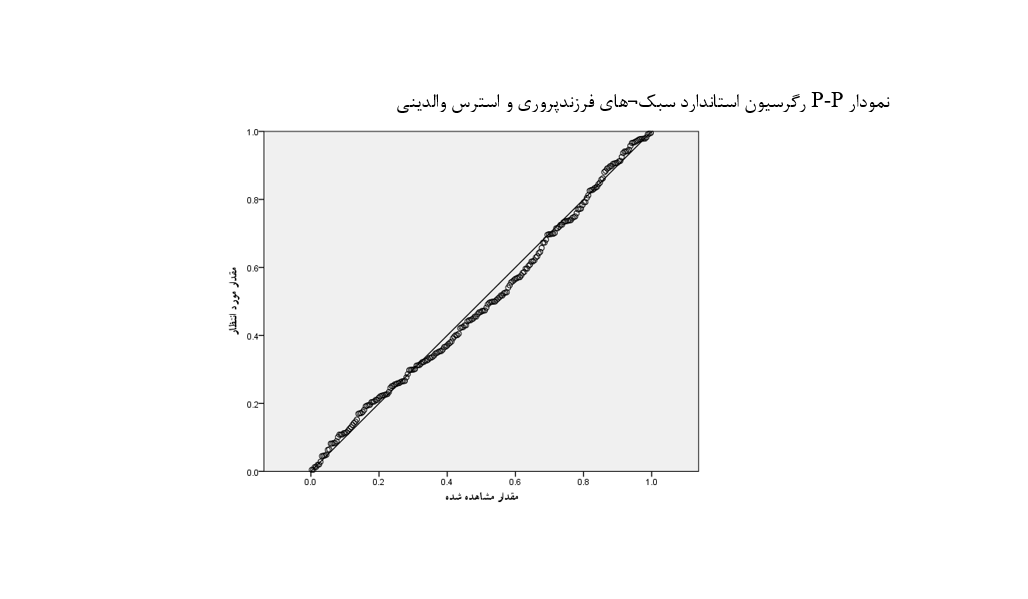
Parenting is one of the most important factors affecting parents’ mental health and the quality of parent–child interactions, and parental stress can also influence parental functioning and the child’s psychological development. The present study aimed to examine the relationship between parenting styles and parental stress among young mothers. This study was descriptive–correlational in design. The statistical population included young mothers under the age of 30 with children under 6 years old in the city of Neyshabur, among whom 200 participants were selected using convenience sampling. Data were collected using Abidin’s Parenting Stress Index (PSI) and Baumrind’s Parenting Styles Questionnaire. The validity and reliability of both instruments have been confirmed in previous studies. Data were analyzed using descriptive statistics, including mean and standard deviation, and inferential statistics, including Pearson correlation and simultaneous multiple regression, in SPSS software. The results showed that the regression model was statistically significant (F = 31.16, P < 0.001), and parenting styles jointly explained approximately 32% of the variance in parental stress (R² = 0.32, Adjusted R² = 0.31). Among the dimensions of parenting, only the authoritarian parenting style was a significant predictor of parental stress (β = 0.51, t = 7.68, P < 0.001), whereas authoritative parenting (β = -0.12, P = 0.074) and permissive parenting (β = 0.01, P = 0.847) did not show significant relationships with parental stress. The findings indicate that increased controlling and strict parental behaviors are associated with higher parental stress, while other parenting styles did not play a significant role in predicting this variable. Overall, the results of this study emphasize the importance of considering parenting styles, particularly the authoritarian style, in designing educational programs and psychological interventions aimed at reducing parental stress among young mothers. It is also suggested that future studies examine the mediating roles of factors such as social support, emotion regulation, and socioeconomic status in explaining parental stress.
References
Barreto, S., Wang, S., Guarnaccia, U., Fogelman, N., Sinha, R., & Chaplin, T. M. (2024). Parent Stress and Observed Parenting in a Parent-Child Interaction Task in a Predominantly Minority and Low-Income Sample. Archives of pediatrics (Lisle, IL), 9(1), 308. https://doi.org/10.29011/2575-825x.100308
Baumrind, D. (1991). The influence of parenting style on adolescent competence and substance use. The journal of early adolescence, 11(1), 56-95. https://doi.org/10.1177/0272431691111004
Corno, L., & et al. (2023). Economic stress and parenting outcomes in early childhood. Developmental Psychology.
Dong, S., Dong, Q., Chen, H., & Yang, S. (2022). Mother's Parenting Stress and Marital Satisfaction During the Parenting Period: Examining the Role of Depression, Solitude, and Time Alone. Frontiers in Psychology, 13, 847419. https://doi.org/10.3389/fpsyg.2022.847419
Giallo, R., & et al. (2021). Emotion regulation and parenting stress. Journal of Family Psychology.
McKinney, C., Donnelly, R., & Renk, K. (2008). Perceived parenting, positive and negative perceptions of parents, and late adolescent emotional adjustment. Child and Adolescent Mental Health, 13(2), 66-73. https://doi.org/10.1111/j.1475-3588.2007.00452.x
Mikolajczak, M., Gross, J. J., & Roskam, I. (2023). Parental burnout: Recent advances. Clinical Psychological Science.
Prime, H., Wade, M., & Browne, D. T. (2020). Risk and resilience in family well-being during COVID-19. American Psychologist, 75(5), 631-643. https://doi.org/10.1037/amp0000660
Roskam, I., Raes, M. E., & Mikolajczak, M. (2021). Exhausted parents: Parental burnout. Affective Science. https://link.springer.com/article/10.1007/s42761-020-00028-4?gsid=a92024ae-88f8-49ba-9dca-1688f35aef56
Salerno, A., Tosto, M., Raciti, I., & Merenda, A. (2024). Self-differentiation and parenting stress in adolescent mothers. An exploratory study. Frontiers in Developmental Psychology, 2, 1306427. https://doi.org/10.3389/fdpys.2024.1306427
Smetana, J. G. (2005). Adolescent-parent conflict: Resistance and subversion as developmental process. In Conflict, contradiction, and contrarian elements in moral development and education (pp. 69-92). Psychology Press. https://www.taylorfrancis.com/chapters/edit/10.4324/9781410611956-7/adolescent%E2%80%93parent-conflict-resistance-subversion-developmental-process-judith-smetana
Totsika, V., & Sylva, K. (2022). Parenting processes and child development outcomes. Child Development Perspectives.
Wang, Q. (2020). Mothers' perceptions of stress, parenting self-efficacy, and permissive and inconsistent discipline: insights from China, Japan, and the United States University of California, Berkeley]. https://search.proquest.com/openview/95a4243c5177d923c991e279e8989e46/1?pq-origsite=gscholar&cbl=18750&diss=y
Downloads
Publication Timeline
- Submitted
- Revised
- Accepted
Issue
Section
License
Copyright (c) 2025 زهرا قاسمی

This work is licensed under a Creative Commons Attribution-NonCommercial 4.0 International License.