اثربخشی مداخله مبتنی بر بازیهای خانوادگی آگاهانه بر افزایش نشاط و انعطاف پذیری خانواده
کلمات کلیدی:
بازیهای خانوادگی آگاهانه, نشاط خانواده, انعطاف پذیری خانواده, شادکامیچکیده
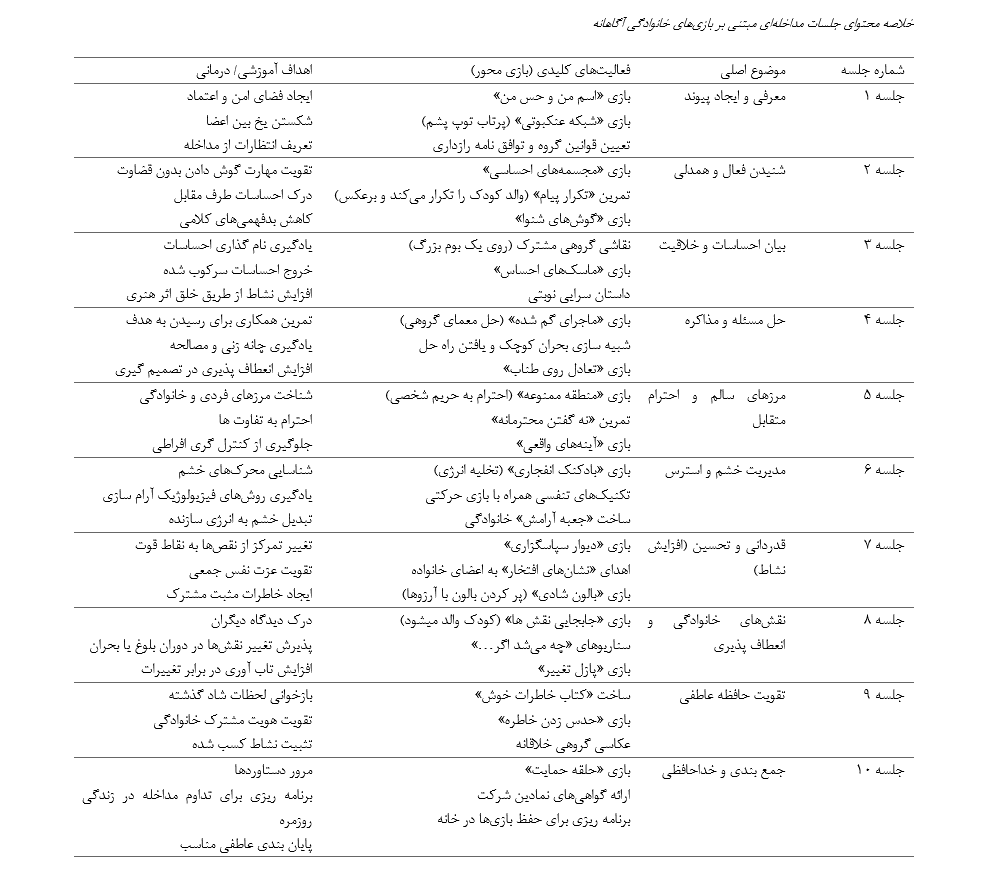
پژوهش حاضر با هدف بررسی اثربخشی مداخله مبتنی بر بازیهای خانوادگی آگاهانه بر افزایش نشاط و انعطاف پذیری خانواده انجام شد. روش پژوهش از نوع نیمه آزمایشی و پیشآزمون، پسآزمون با گروه کنترل بود. جامعه آماری این پژوهش شامل کلیه خانوادههای تحت پوشش بهزیستی مراجعه کننده به مراکز مشاوره خانواده در شهر تهران میباشد. روش نمونه گیری تصادفی ساده بود. از جامعه آماری 40 نفر انتخاب و به طور تصادفی نسبی در دو گروه کنترل و آزمایش قرار گرفتند. گروه آزمایش در 10 جلسه 90 دقیقهای مداخله مبتنی بر بازیهای خانوادگی آگاهانه شرکت کردند. گروه کنترل آموزشی دریافت نکرد. آزمودنیها قبل و بعد از مداخله به پرسشنامه شادکامی آکسفورد و مقیاس انعطافپذیری خانواده شاکری (۱۳۸۲) پاسخ دادند. دادهها با استفاده از روش کوواریانس تحلیل شد. نتایج نشان داد که مداخله مبتنی بر بازیهای خانوادگی آگاهانه میتواند نشاط و انعطاف پذیری خانواده را افزایش دهد. با توجه به یافته ها، میتوان نتیجه گرفت که بازیهای خانوادگی آگاهانه به عنوان یک راهکار کم هزینه، جذاب و کاربردی، پتانسیل بالایی برای مداخله در سطوح پیشگیرانه و درمانی در خانوادههای آسیب پذیر دارد.
مراجع
Alabdulakareem, E., & Jamjoom, M. (2020). Computer-assisted learning for improving ADHD individuals' executive functions through gamified interventions: A review. Entertainment Computing, 33, 100341. https://doi.org/10.1016/j.entcom.2020.100341
Amodia-Bidakowska, A., Laverty, C., & Ramchandani, P. G. (2020). Father-child play: A systematic review of its frequency, characteristics and potential impact on children's development. Developmental Review, 57, 100924. https://doi.org/10.1016/j.dr.2020.100924
Choi, Y., & Lim, J. (2021). Structural relationship among parent's play participation, young children's playfulness, self-regulation and happiness. Human Ecology Research, 59(1), 71-82. https://doi.org/10.6115/fer.2021.006
Colston, R. (2023). An exploration of the effects of adult play on happiness and well-Being https://research.usc.edu.au/view/pdfCoverPage?instCode=61USC_INST&filePid=13178128060002621&download=true
Dodangeh, Z., Malek Hosseini, E., & Shamsipour Dehkordi, P. (2021). The effect of parents' attitude toward play in green spaces on children's cognitive flexibility during home quarantine. Journal of Psychology and Psychiatry of Cognition, 8(2), 100-112. https://www.sid.ir/fa/VEWSSID/J_pdf/10005214000209.pdf
Fortune, J. (2022). Why We Play: How to find joy and meaning in everyday life. Thread. https://books.google.com/books?hl=en&lr=&id=lwlxEAAAQBAJ&oi=fnd&pg=PT5&dq=Fortune,+J.+(2022).+Why+We+Play:+How+to+find+joy+and+meaning+in+everyday+life,+Thread.+%09&ots=Hz54bN4kmi&sig=dfcFVYQABbQUeEW2zRXPkycJpTA
Higgins-Klein, D. (2013). Mindfulness Based Play Family Therapy: Theory And Practice. WW Norton & Company. https://books.google.com/books?hl=en&lr=&id=dQ-aAAAAQBAJ&oi=fnd&pg=PR11&dq=Higgins-Klein,+D.+(2013).+Mindfulness+Based+Play+Family+Therapy:+Theory+And+Practice,+WW+Norton+%26+Company.+%09&ots=td14BpRm_6&sig=Kb6pVkSU2yt86upn-73snlSBDro
İçen, B. K., & Çelik, O. T. (2026). Examination of the Effects of a Play-Based Mindfulness Training Program on Resilience, Emotion Regulation Skills, and Executive Functions of Preschool Children. Children, 13(1), 110. https://doi.org/10.3390/children13010110
Kerr, B. (2025). Happy Families, Free Families. In The Psychology of Liberty: Reclaiming Everyday Freedom (pp. 125-140). Springer Nature Switzerland. https://doi.org/10.1007/978-3-031-84670-0_9
Khazaeili, Z., Kashani-Vahid, L., Vakili, S., & Afrooz, G. A. (2023). Evaluating the Effectiveness of Mindfulness-Based Family-Centered Game Programs on Emotion Regulation and Instability/Negativity of Children with Behavioral Disorders. Middle Eastern Journal of Disability Studies, 13, 141. https://jdisabilstud.org/article-1-2970-en.html
Lanjekar, P. D., Joshi, S. H., Lanjekar, P. D., & Wagh, V. (2022). The effect of parenting and the parent-child relationship on a child's cognitive development: A literature review. Cureus, 14(10). https://doi.org/10.7759/cureus.30574
Lin, X., & Li, H. (2020). Parents' play beliefs and engagement in young children's play at home. In Working with Parents and Families in Early Childhood Education (pp. 5-20). Routledge. https://doi.org/10.4324/9780429288876-2
Mengxia, L. (2024). Preschoolers' cognitive flexibility and emotion understanding: A developmental perspective. Frontiers in Psychology, 15, 1280739. https://doi.org/10.3389/fpsyg.2024.1280739
Musick, G., Freeman, G., & McNeese, N. J. (2021). Gaming as family time: Digital game co-play in modern parent-child relationships. Proceedings of the ACM on Human-Computer Interaction, 5(CHI PLAY), 1-25. https://doi.org/10.1145/3449123
Safarian, S., Salehi, K., Dehghani, M., & Karimian, Z. (2025). The effect of group games on school happiness of third-grade male students. Journal of Applied Psychological Research, 16(4), 103-118. https://japr.ut.ac.ir/article_103591.html
Shakeri, S. (2003). Investigating the effect of family flexibility on mental health of high school students in Shiraz
Soltani Banavandi, E., Khezri Moghadam, N., & Bani Asadi, H. (2019). The role of family cohesion and flexibility in predicting students' academic vitality with the mediation of meaning in life. Positive Psychology Research Journal, 5(3), 53-70. http://ppls.ui.ac.ir/article_24826.html
Sun, M. X., Zhao, Z. F., & Liu, H. (2025). Fostering intergenerational communication through games: an exploratory study on metaphorical life games in family settings. Frontiers in Public Health, 13, 1532603. https://doi.org/10.3389/fpubh.2025.1532603
Teichert, L., & Chan, V. (2025). Finding Joy in Communication with Families. Language and Literacy, 27(3), 62-86. https://doi.org/10.20360/langandlit29756
Teufl, L., & Ahnert, L. (2022). Parent-child play and parent-child relationship: Are fathers special? Journal of Family Psychology, 36(3), 416. https://doi.org/10.1037/fam0000933
Valizadeh, R., & Jangi, F. (2021). Investigating the effectiveness of play and group training on students' vitality, happiness and health. The First National Conference on Applied Ideas in Educational Sciences, Psychology and Cultural Studies, Bushehr.
Wonders, L. L. (2025). Mindfulness-based play therapy: A transtheoretical and neurobiological approach to psychotherapy with children and families. Routledge. https://doi.org/10.4324/9781003468585
Yang, Y., Bulut, S., Bukhori, B., Piskorz-Ryń, O., & Chikwe, C. (2025). The Role of Family Routines in Promoting Child Mental Health: A Qualitative Study. Journal of Research & Health, 15(2). https://doi.org/10.32598/JRH.15.2.2474.1
Zare, M., & Samani, S. (2008). Investigating the role of family flexibility and cohesion in children's goal orientation. Family Research Quarterly, 14(13), 17-36. http://journals.sbu.ac.ir/article_95097_9cdea5460c5c8c49b4148a7ee612f33c.pdf
دانلودها
گاهشمار انتشار
- ارسال
- بازنگری
- پذیرش
شماره
نوع مقاله
مجوز
حق نشر 2025 اعظم مقدم فر, مژگان هیبتی, سمانه هوشیار (نویسنده); فاطمه بزرگی; شهره سادات فیلسوف (نویسنده)

این پروژه تحت مجوز بین المللی Creative Commons Attribution-NonCommercial 4.0 می باشد.