ارائه مدل سبک رهبری و نگرش نسبت به تغییر با میانجی گری هوش اخلاقی در مربیان فوتبال کشور عراق
کلمات کلیدی:
سبک رهبری, نسبت به تغییر, هوش اخلاقی, مربیان فوتبال, عراقچکیده
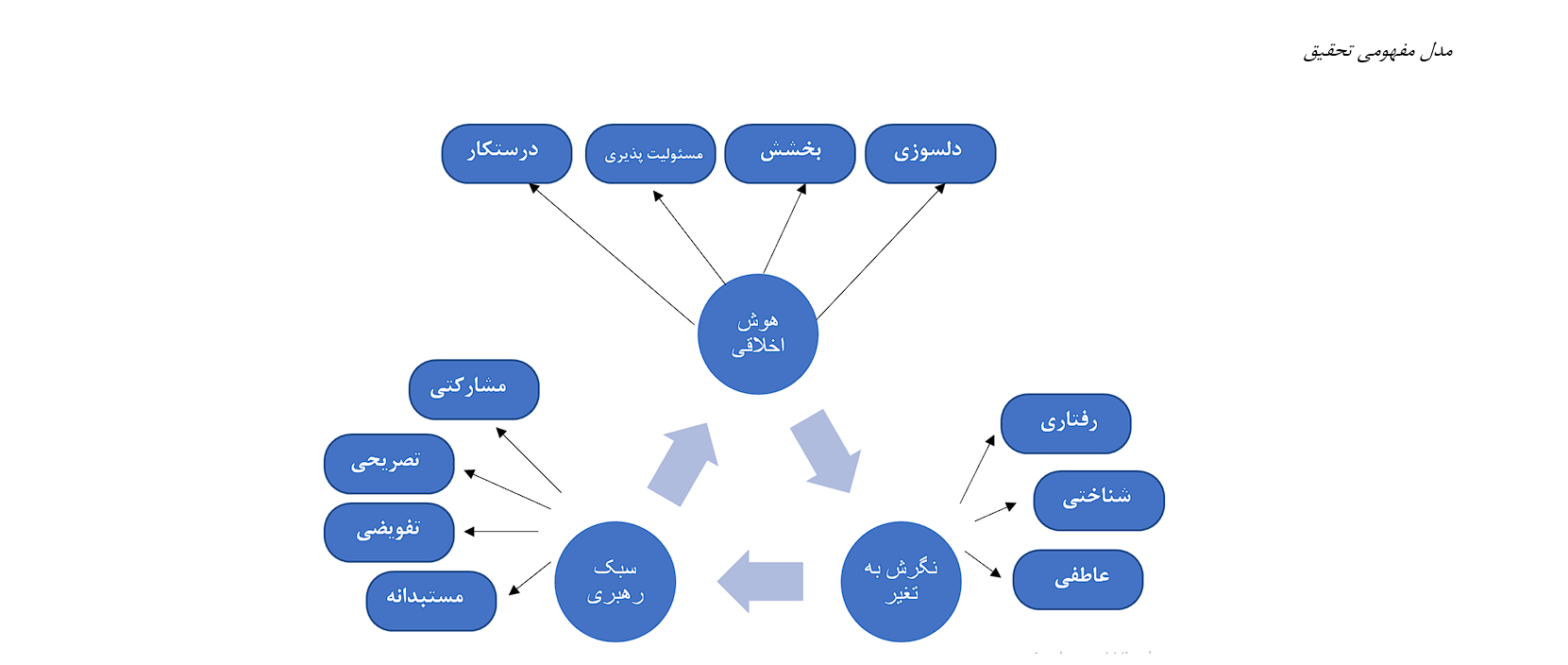
هدف پژوهش حاضر ارائه مدل رابطه سبک رهبری و نگرش نسبت به تغییر با میانجیگری هوش اخلاقی در مربیان فوتبال کشور عراق بود. این پژوهش از نظر هدف کاربردی و از نظر روش، توصیفی ـ همبستگی بود که با رویکرد پیمایشی و مبتنی بر مدلسازی معادلات ساختاری انجام شد. جامعه آماری پژوهش، مربیان فوتبال کشور عراق و اعضای مرتبط با مجمع مربیان فوتبال بود که تعداد آنان ۳۳۶ نفر گزارش شد. بر اساس جدول کرجسی و مورگان، ۱۷۹ نفر به روش تصادفی ساده بهعنوان نمونه آماری انتخاب شدند. برای گردآوری دادهها از پرسشنامه سبک رهبری بر مبنای الگوی رهبری موقعیتی هرسی، بلانچارد و ناتمایر، پرسشنامه نگرش نسبت به تغییر و پرسشنامه هوش اخلاقی استفاده شد. روایی ابزارها از طریق روایی محتوایی، روایی همگرا و واگرا و پایایی آنها با آلفای کرونباخ و پایایی ترکیبی تأیید گردید. دادهها با استفاده از نرمافزارهای SPSS و Smart PLS تحلیل شدند. یافتهها نشان داد سبک رهبری با هوش اخلاقی مربیان فوتبال عراق رابطه مثبت و معنادار دارد. همچنین هوش اخلاقی با نگرش نسبت به تغییر رابطه مثبت و معناداری نشان داد. نتایج آزمون میانجیگری نیز نقش میانجی هوش اخلاقی را در رابطه میان سبک رهبری و نگرش نسبت به تغییر تأیید کرد. شاخصهای برازش مدل، از جمله مقدار GOF برابر با 0.۶۶۰، بیانگر برازش مطلوب مدل بود. در نتیجه، تقویت سبکهای رهبری کارآمد همراه با ارتقای هوش اخلاقی میتواند با نگرش مثبتتر مربیان فوتبال نسبت به تغییر همراه باشد.
مراجع
Barati, N., & Yazdanpanah Shah Abadi, M. R. (2011). Investigating the conceptual relationship between social capital and quality of life in urban environment. Cultural Sociology Research, 2(1), 25-49. https://www.sid.ir/paper/241236/
Beheshtifar, M., Esmaeli, Z., & Nekoie-Moghadam, M. (2011). Effect of moral intelligence on leadership. European Journal of Economics, Finance and Administrative Sciences, 43, 6-11. https://www.researchgate.net/profile/Malikeh-Beheshtifar/publication/267404562_Effect_of_Moral_Intelligence_on_Leadership/links/55d86fca08aec156b9ac128a/Effect-of-Moral-Intelligence-on-Leadership.pdf
Chin, W. W. (1998). Modern methods for business research. Lawrence Erlbaum Associates. https://www.taylorfrancis.com/chapters/edit/10.4324/9781410604385-10/partial-least-squares-approach-structural-equation-modeling-wynne-chin
Creswell, J. W., & Creswell, J. D. (2018). Research design: Qualitative, quantitative, and mixed methods approaches. SAGE Publications. https://www.ucg.ac.me/skladiste/blog_609332/objava_105202/fajlovi/Creswell.pdf
Davari, A., & Rezazadeh, A. (2014). Structural equation modeling with PLS software. Jahad Daneshgahi Publishing Organization. https://www.researchgate.net/publication/264519454_Structural_Equation_Modeling_with_PLS
Dunham, R. B., Grube, J. A., Gardner, D. G., Cummings, L. L., & Pierce, J. L. (1989). The development of an attitude toward change instrument. Washington, DC.
Errida, A., & Lotfi, B. (2021). The determinants of organizational change management success: Literature review and case study. International Journal of Engineering Business Management, 13, 1-15. https://doi.org/10.1177/18479790211016273
Fornell, C., & Larcker, D. F. (1981). Evaluating structural equation models with unobservable variables and measurement error. Journal of Marketing Research, 18(1), 39-50. https://doi.org/10.2307/3151312
Geisser, S. (1974). A predictive approach to the random effects model. Biometrika, 61(1), 101-107. https://doi.org/10.1093/biomet/61.1.101
Gholizadeh, M., & Manzari, M. (2019). Effectiveness of moral intelligence training on changing students' attitudes toward drugs. Social Health and Addiction, 6(21). https://www.noormags.ir/view/fa/articlepage/1497890/
Hair, J. F., Risher, J. J., Sarstedt, M., & Ringle, C. M. (2019). When to use and how to report the results of PLS-SEM. European Business Review, 31(1), 2-24. https://doi.org/10.1108/EBR-11-2018-0203
Henseler, J., Ringle, C. M., & Sarstedt, M. (2015). A new criterion for assessing discriminant validity in variance-based structural equation modeling. Journal of the Academy of Marketing Science, 43(1), 115-135. https://doi.org/10.1007/s11747-014-0403-8
Hersey, P., Blanchard, K. H., & Natemeyer, W. E. (1979). Situational leadership, perception, and the impact of power. Group & Organization Studies, 4(4), 418-428. https://doi.org/10.1177/105960117900400404
Holten, A. L., & Brenner, S. O. (2015). Leadership style and the process of organisational change. Leadership & Organization Development Journal, 36(1), 2-16. https://doi.org/10.1108/LODJ-11-2012-0155
Hussain, S. T., Lei, S., Akram, T., Haider, M. J., Hussain, S. H., & Ali, M. (2018). Kurt Lewin's change model: A critical review of the role of leadership and employee involvement in organizational change. Journal of Innovation & Knowledge, 3(3), 123-127. https://doi.org/10.1016/j.jik.2016.07.002
Izadi, K., & Siadat, S. A. (2016). Investigating the relationship between quantum management with job enthusiasm and job adaptability of University of Isfahan staff. Educational Management Innovations, 3(11), 25-34. https://sanad.iau.ir/Journal/jmte/Article/1110414
Jung, K. B., Kang, S. W., & Choi, S. B. (2020). Empowering leadership, risk-taking behavior, and employees' commitment to organizational change: The mediated moderating role of task complexity. Sustainability, 12(6), Article 2340. https://doi.org/10.3390/su12062340
Lawshe, C. H. (1975). A quantitative approach to content validity. Personnel Psychology, 28(4), 563-575. https://doi.org/10.1111/j.1744-6570.1975.tb01393.x
Lennick, D., & Kiel, F. (2007). Moral intelligence: Enhancing business performance and leadership success. Pearson Prentice Hall. https://books.google.com/books?hl=en&lr=&id=tfk6gKtF5WYC&oi=fnd&pg=PR7&dq=Lennick,+D.+and+F.+Kiel+(2007).+Moral+intelligence:+Enhancing+business+performance+and+leadership+success,+Pearson+Prentice+Hall.+%09&ots=L4fH90LCU6&sig=RtknRq8kCg6x5LgTGHwMUbjQ8VY
Mayer, D. M., Aquino, K., Greenbaum, R. L., & Kuenzi, M. (2012). Who displays ethical leadership, and why does it matter? An examination of antecedents and consequences of ethical leadership. Academy of Management Journal, 55(1), 151-171. https://doi.org/10.5465/amj.2008.0276
Oreg, S., & Sverdlik, N. (2011). Ambivalence toward imposed change: The conflict between dispositional resistance to change and the orientation toward the change agent. Journal of Applied Psychology, 96(2), 337-349. https://doi.org/10.1037/a0021100
Polit, D. F., Beck, C. T., & Owen, S. V. (2007). Is the CVI an acceptable indicator of content validity? Appraisal and recommendations. Research in Nursing & Health, 30(4), 459-467. https://doi.org/10.1002/nur.20199
Rafferty, A. E., Jimmieson, N. L., & Armenakis, A. A. (2013). Change readiness: A multilevel review. Journal of Management, 39(1), 110-135. https://doi.org/10.1177/0149206312457417
Saatchi, M., Kamkari, K., & Asgarian, M. (2010). Psychological tests. Virayesh Publishing.
Sobel, M. E. (1982). Asymptotic confidence intervals for indirect effects in structural equation models. Sociological Methodology, 13, 290-312. https://doi.org/10.2307/270723
Stone, M. (1974). Cross-validatory choice and assessment of statistical predictions. Journal of the Royal Statistical Society: Series B, 36(2), 111-147. https://doi.org/10.1111/j.2517-6161.1974.tb00994.x
Tenenhaus, M., Vinzi, V. E., Chatelin, Y. M., & Lauro, C. (2005). PLS path modeling. Computational Statistics & Data Analysis, 48(1), 159-205. https://doi.org/10.1016/j.csda.2004.03.005
دانلود
گاهشمار انتشار
- ارسال
- بازنگری
- پذیرش
شماره
نوع مقاله
مجوز
حق نشر 2025 علی حسین جاسم (نویسنده); نسرین عزیزیان کهن; عباس نقی زاده باقی, مهرداد محرم زاده (نویسنده)

این پروژه تحت مجوز بین المللی Creative Commons Attribution-NonCommercial 4.0 می باشد.